


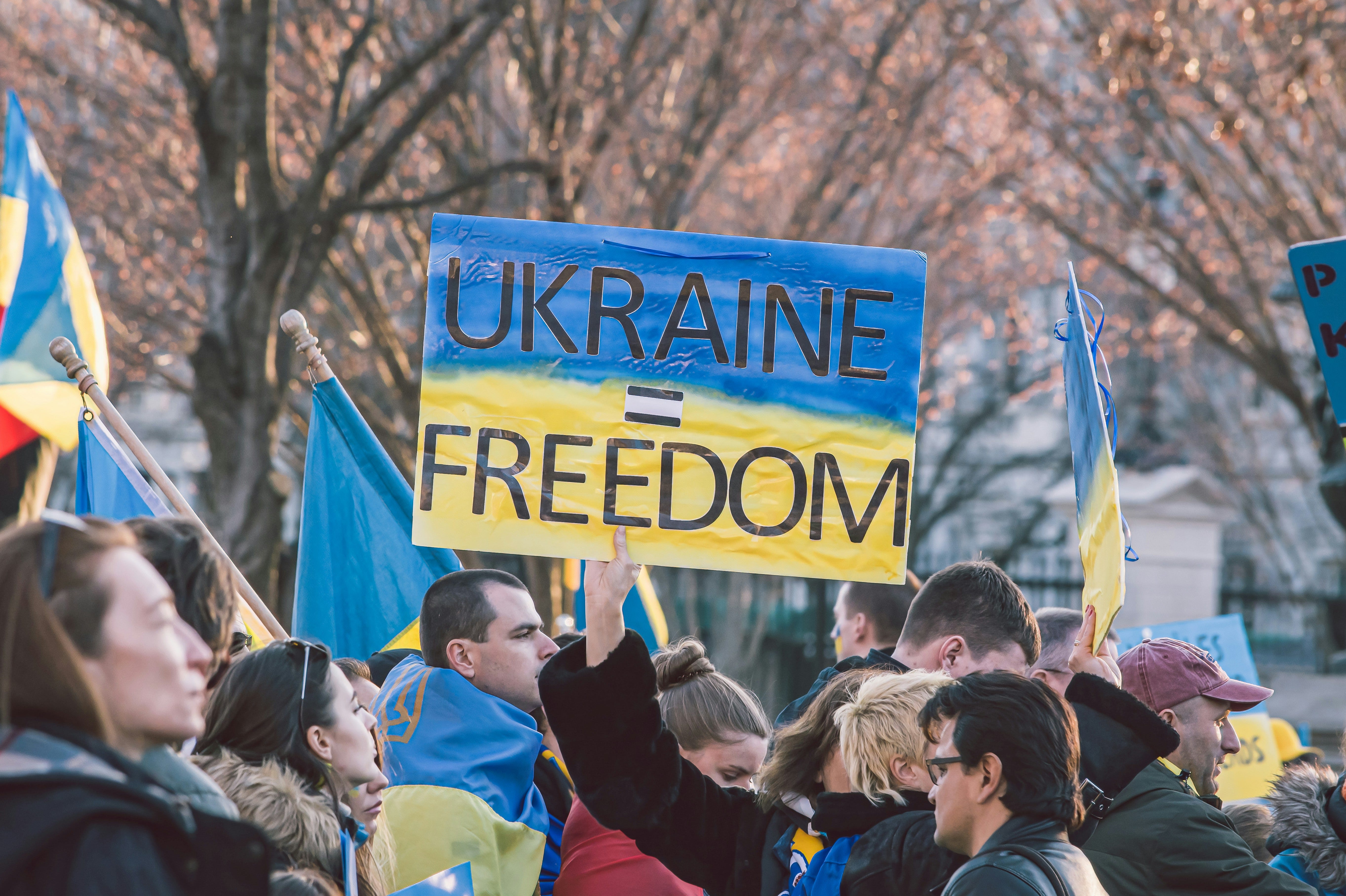
It’s been four years since Russia launched its full-scale invasion of Ukraine in 2022.
Here are four international law aspects you should understand.
1. Violation of the use of force
States cannot use force against other states.
There are only two exceptions: Self-defense, or UN Security Council authorisation. Russia had neither.
Russia claimed collective self-defense, saying it was defending Donetsk and Luhansk (i.e. the Donbas) from Ukraine.
International law does allow collective self-defense: If someone attacks your friend, you can help your friend defend themselves.
But your “friend” has to be a state.
Donetsk and Luhansk are not states - they’re internationally recognized as part of Ukraine.
Russia also claimed anticipatory self-defense, arguing Ukraine joining NATO posed an imminent threat.
But imminence means a threat that is instant and overwhelming, leaving no choice but to act.
That was not the case.
Finally, Russia claimed it was stopping a genocide by Ukraine against people in Donetsk and Luhansk.
But invading for humanitarian reasons (without UN approval) is not a recognized exception to the prohibition on force.
That’s why the invasion is widely seen as unlawful.
2. Violations of the laws of warfare
International law has rules on how war is fought.
Some core rules: You can’t target civilians (only soldiers). Can’t target civilian infrastructure like schools or hospitals. Can’t use means and methods of warfare that cause unnecessary suffering. Can’t damage the environment. (etc etc)
There have been credible judgments and reports of all these rules (and then some!) being violated.
This war has also accelerated the use of new technologies, like drones, AI-assisted weapons and cyber operations.
This makes applying the rules even harder.
3. Criminal accountability is moving slowly
Russia’s invasion is widely described as a crime of aggression (Article 8bis).
But the International Criminal Court (ICC) can’t prosecute the crime of aggression because Russia would have to be an ICC party (and it’s not).
That’s why discussions began about creating a special tribunal for the crime of aggression. Negotiations are still ongoing.
The ICC has, however, issued arrest warrants for Putin and other senior officials for war crimes and crimes against humanity.
ICC member states are supposed to arrest suspects who enter their territory. But so far, those facing warrants have simply avoided traveling to those countries.
So, justice is moving… just slowly (and only as far as politics allows…)!
4. Ceasefire talks are ongoing
There have been multiple rounds of negotiations brokered by the U.S.
The leaked draft ceasefire proposal circulated at the end of 2025 was problematic (to say the least).
Nothing durable came from it.
A core sticking point is what happens to Donetsk and Luhansk. Who do they legally belong to?
Under international law, territory can’t be taken (and kept) by force, as Russia has done… But Ukraine is under pressure to compromise.
Stay tuned.
We’re almost at 1,000 SAIL readers; thank you! If you like SAIL, share it!
Other SAIL posts you might enjoy:
Short and a crisp summary. Few important issues related to the conflict are use of PMSC and foreign fighters.