


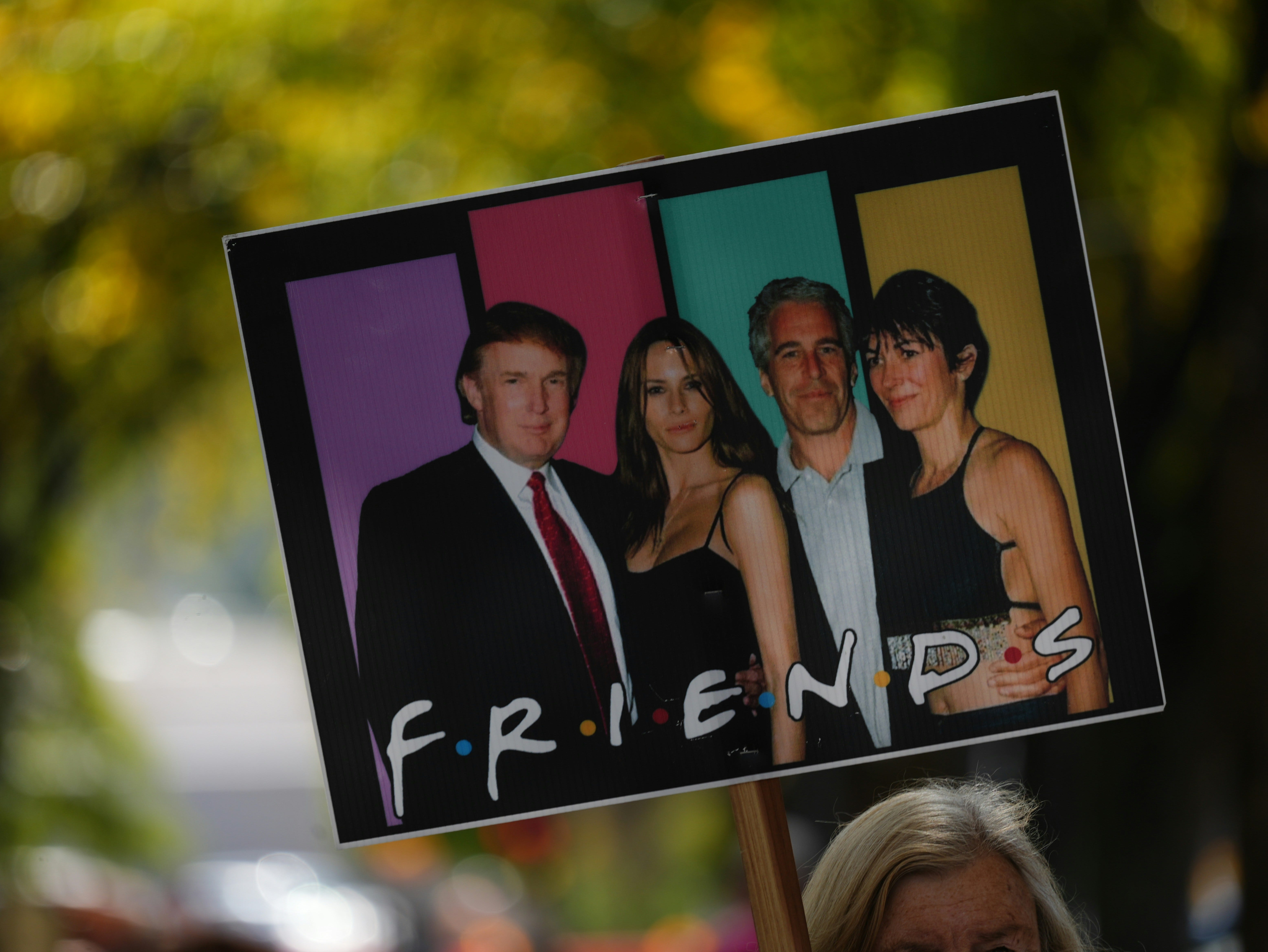
Jeffrey Epstein was a financier accused of running a large sex-trafficking operation involving underage girls.
The “Epstein files” are documents released publicly to increase transparency about his crimes.
There have been a few rounds of releases, but the biggest one (3 million pages!) dropped on 30 January 2026.
Here are 5 ways they intersect to international law:
Countries must investigate and take legal action against trafficking and sexual exploitation
185 countries (including the U.S.) are party to the Trafficking Protocol, requiring countries to identify, report, investigate, and prosecute trafficking.
196 countries are party to the Convention on the Rights of the Child, explicitly banning sexual exploitation of minors. The U.S. signed the treaty but hasn’t formally approved (ratified) it. Still, the ban on child sexual exploitation is considered customary international law — basically, a rule that all countries follow because the world treats it as legally required. So the U.S. is expected to comply, treaty or not.
Epstein’s network allegedly involved victims from multiple countries, making it a cross-border trafficking issue.
Some countries (e.g., Lithuania, the UK) have opened investigations, but many more should follow!
Heads of state, senior officials and royals can be prosecuted
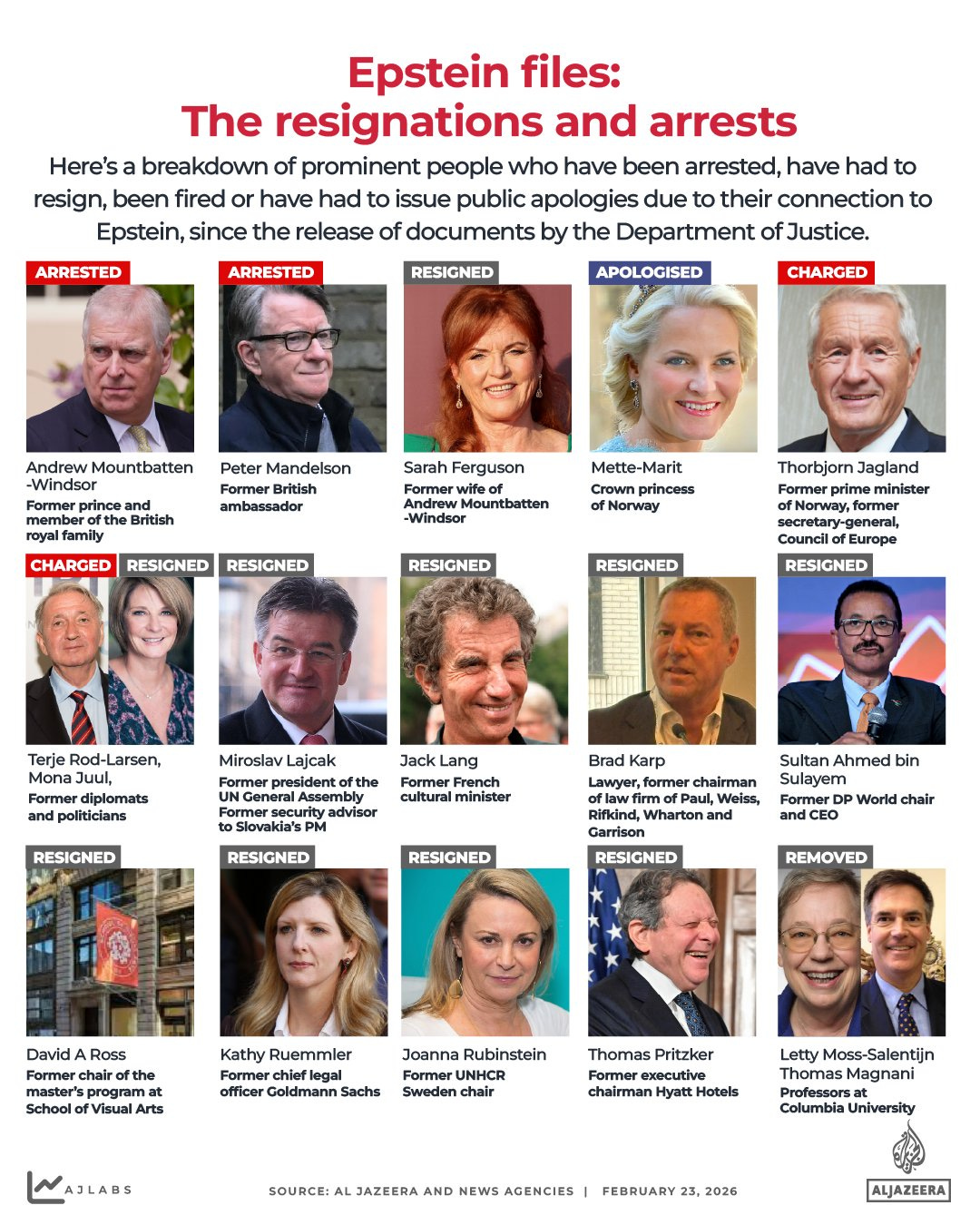
The files implicate some powerful people in personal dealings with Epstein, including a Slovak Prime Minister’s national security advisor, senior officials like Joanna Rubinstein, politicians, and royals like (former) Prince Andrew and a Princess of Norway.
In case you’re wondering… all of them can be prosecuted in their own country for any criminal personal dealings, whether still in office or after resigning.
(Except Norwegian royals, who are generally protected from prosecution unless the King expressly waives their immunity.)
Reacting to the files, the UN said no one is above the law. So… we’re waiting 😄
Here’s a handy visual Al Jazeera made - lots of resignations, but few arrests… for now:
The International Criminal Court (ICC) probably won’t step in
As UN experts have explained, it’s possible that we’re dealing with some crimes against humanity: basically large-scale, organised attacks or abuse against civilians.
Under international law, that’s punished by the ICC.
But it likely won’t get involved for two reasons.
First, the ICC can’t prosecute crimes on U.S. soil or by U.S. nationals because the U.S. is not a party to the ICC.
Second, the ICC is a court of last resort. It only steps in if national courts can’t or won’t act. But the U.S. already prosecuted Epstein and sidekick Ghislaine Maxwell.
That said, if it turns out that any of these crimes happened in another country that is part of the ICC, the Court might be able to step in — as long as that country hasn’t already dealt with it.
Even if the ICC doesn’t get involved, domestic courts in many countries can still investigate and prosecute anyone responsible for these crimes (and should!).
Epstein’s attempt to access Libyan assets likely broke international law
Trafficking isn’t the only issue here.
The files suggest Epstein’s associates tried to get their hands on Libya’s frozen state assets, possibly with help from former British and Israeli intelligence officials.
Under international law, countries control their own assets, and interfering without permission is a serious violation of sovereignty.
After former Libyan leader Gaddafi was overthrown, the UN Security Council told all countries to freeze certain Libyan state funds and assets.
This meant even Libya couldn’t access that money abroad unless the UN specifically allowed it.
Unless Epstein got explicit authorisation from the Libyan government or UN Security Council, trying to access those funds would almost certainly have been illegal.
Bill Gates and pandemic preparedness
Some emails between Bill Gates and Epstein suggest they were testing pandemic preparedness years before COVID-19.
They appear to have been exploring ways to simulate and plan for potential outbreaks.
On its face, there’s nothing illegal here. Planning or testing pandemic responses is considered good practice and aligns with World Health Organization guidance.
Legal concerns would only come into play if it could be shown that they somehow caused or triggered COVID‑19, but the emails alone don’t suggest that (though conspiracy theorists on the internet would disagree!).
Anything I missed? Let me know in the comments! And feel free to share if you enjoyed this post!
Other SAIL posts you might enjoy:
Eurovision Meets International Law: What to say at the Dinner Table (in 3 minutes)
5 Ways Santa Claus Might Bend International Law (If He Existed)… in 2 minutes
3 Ways Bad Bunny’s 2026 Super Bowl Performance Reflected International Law (in 1 minute)
Does International Law Have a Place at Eurovision? (In 2 minutes)
How International Law protects you (or doesn’t) at the 2026 World Cup