


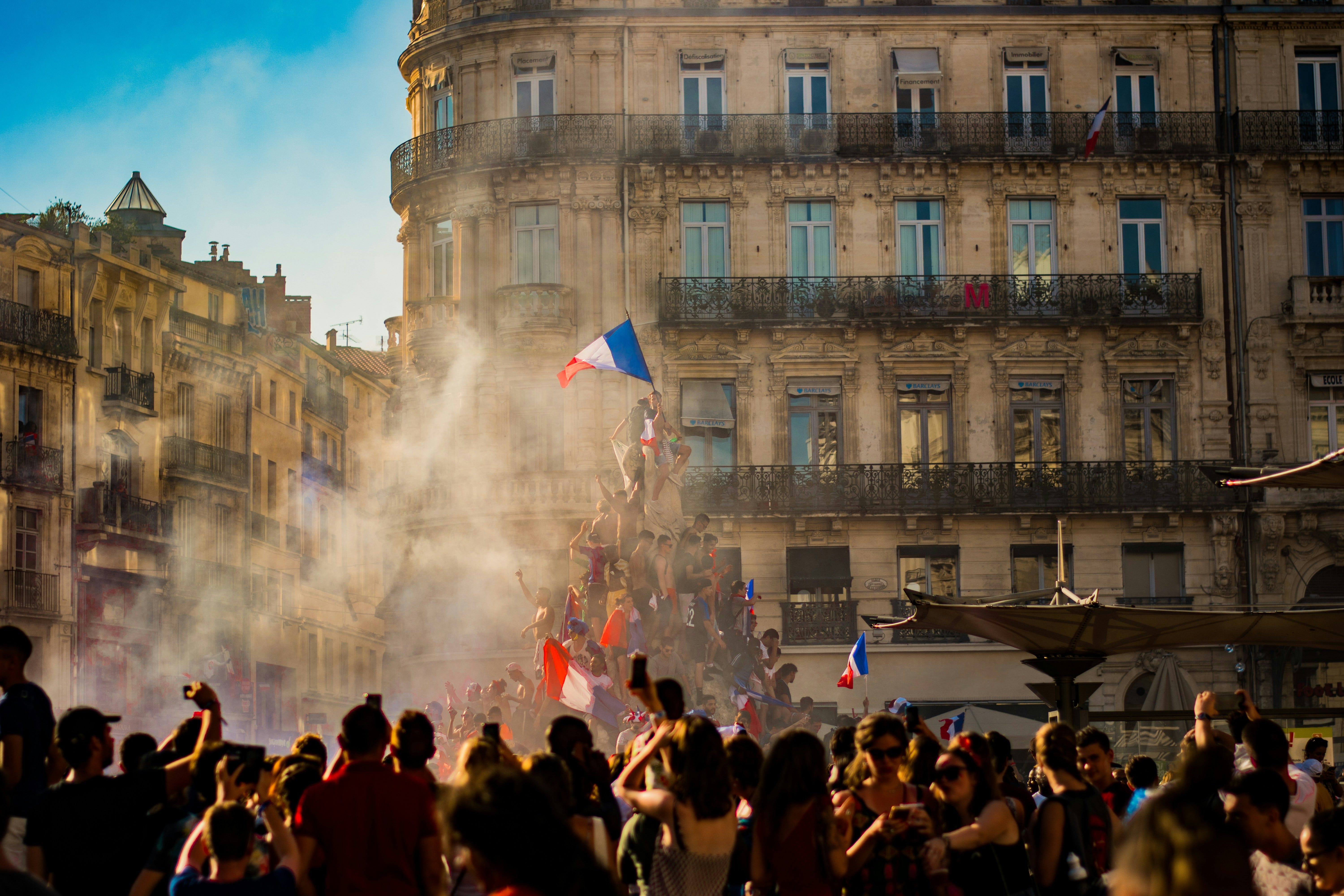
Hundreds of thousands have taken the streets of France over poor school conditions, inequality, high living costs and underfunded public services.
Thousands have been arrested and there has been reported violence by both protesters and police.
Here are your international law questions answered.
1. Is peaceful protest allowed under international law?
Yes.
Article 21 of the International Covenant on Civil and Political Rights (ICCPR) and Article 11 of the European Convention on Human Rights (ECHR) protect everyone’s right to peaceful assembly, which includes protest.
France is a party to both treaties.
2. Can protests be restricted by the French government in any way?
Yes.
Restrictions must have a basis in French law and be ‘necessary in a democratic society’, for reasons like national security, public safety, public order, public health or morals, or the rights and freedoms of others.
3. Are protesters allowed to be violent?
No.
In 2020, the UN Human Rights Committee (the body of experts that monitors the ICCPR) published non-binding guidance on how to understand the right to peaceful assembly.
It clarified that violent protest is not protected. Protesters can’t say “This is our human right!” if they’re being violent.
It also said if some marchers are peaceful but other violent groups operate alongside them (as is reported in France), the peaceful protester keep their right to protest but the violent ones don’t. In other words, peacefulness is judged person by person, not by the whole crowd.
Violent protesters do keep their other rights, though, such as the right not to be mistreated.
4. So the police can be violent in response?
No.
According to the UN Human Rights Committee’s 2020 guidance, the police must first try to calm things down, try peaceful methods first and give a warning before they use any force.
When they do use force, it must have a legal basis, be truly needed, not go further than the situation requires, be used with care and must not target certain groups unfairly.
The police may only use as little force as needed and once the danger is over, the force must stop.
Force must be aimed at the people who are being violent, or threatening to be. People who are just refusing to move should not be hurt.
They also can’t use any weapons they want: tear gas and water cannons are a last resort, and weapons like grenades must first be tested by independent experts.
Also, arresting large crowds without any distinction is unlawful. There must be a reason for each individual arrest. But thousands have been arrested in France these past few weeks: was each arrest based on what that person actually did?
5. Hasn’t France been down this road before?
Oh yes, my friends.
In 2024, during its regular review of France’s human rights record, the UN Human Rights Committee raised concerns that look a lot like what we’re seeing today.
It was concerned about reports that French police were stopping and arresting protesters for no good reason (sometimes for just being near a protest).
It was worried police were using questionable weapons in ways the rules don’t allow, and badly hurting people.
It also asked France to rethink about letting police use grenades at all.
… But here we are.
6. So what should the French government do now?
It has opened dozens of investigations into alleged police violence.
That’s what the 2020 guidance requires: investigations must be effective, impartial and timely.
7. If someone was unlawfully arrested or hurt, can they do anything about it?
Yes.
First, they must use the French system: complaints and the French courts.
If that fails, they can complain to the UN Human Rights Committee or take France to the European Court of Human Rights in Strasbourg.
They must pick one: Neither body will look at a case that has already gone to the other.
The whole thing can take years… but in my view, much better than nothing.