

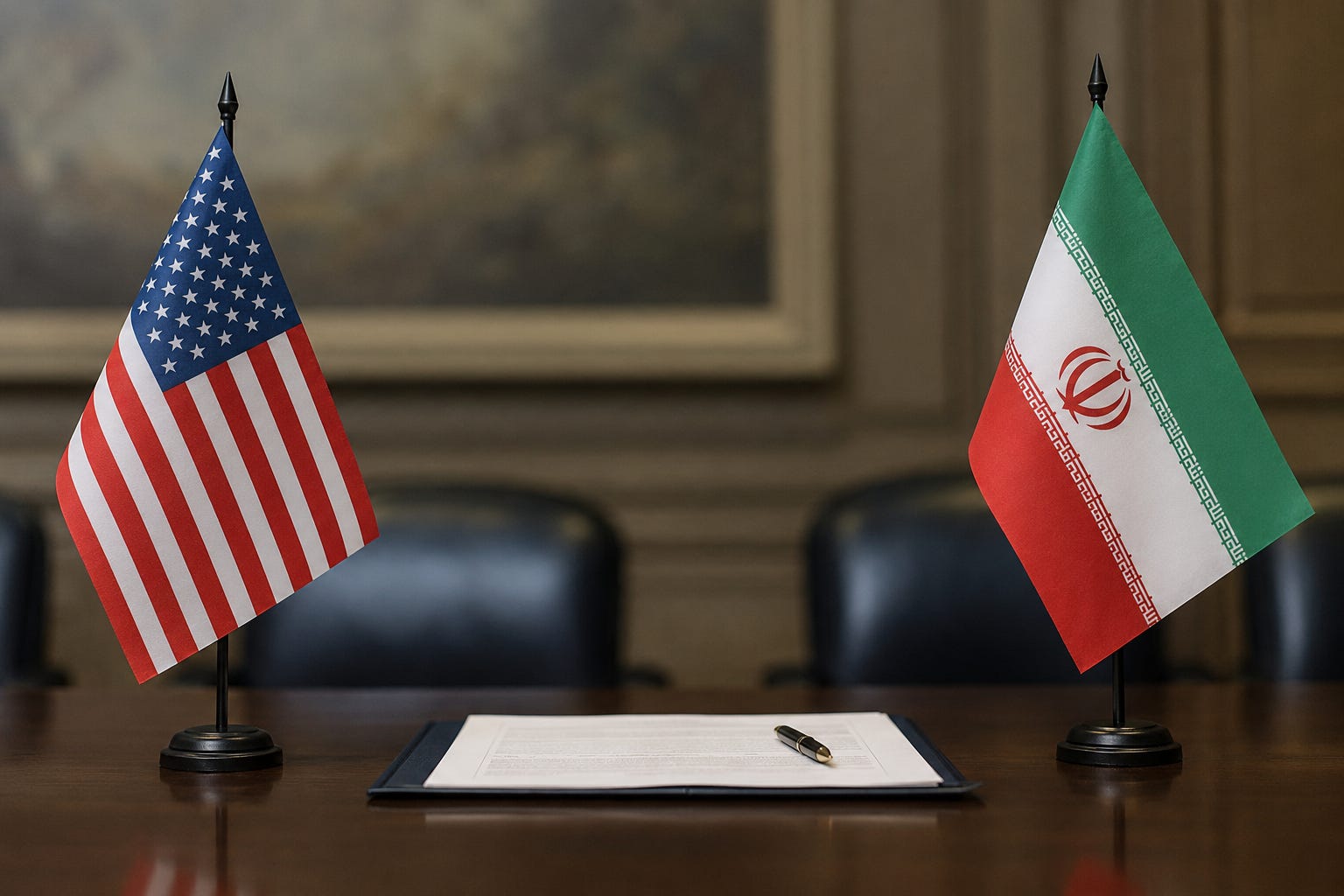
A quick summary of this Memorandum of Understanding (MoU)’s points, with international law commentary:
1. Stop fighting forever: Both sides end the war immediately, stop attacking, and respect Lebanon’s borders
Problem: Israel is still attacking Lebanon.
Since Israel hasn’t signed this deal, it has no legal obligation to stop. The US promised Iran an outcome it can’t actually compel Israel to deliver.
Also relevant: Israel’s conduct in Lebanon is actually governed by the bilateral Israel-Lebanon ceasefire implemented on 3 June 2026, which says Israel has the right to act ‘in self-defense at any time against planned, imminent or ongoing attacks’. So it can claim self-defense and keep attacking.
So this specific MoU clause is hollow until at least one of the following happens:
(a) The binding UN Security Council resolution promised in clause 14 below imposes obligations on Israel directly;
(b) Another agreement on this specific point is signed between the US, Iran, Israel and Lebanon;
(c) The US gets Israel to stop.
2. Respect each other’s independence: No interfering in each other’s internal affairs
This is a core international law under Article 2(7) UN Charter. Good.
3. Aim to reach a final deal within 60 days (unless both agree to extend)
The final deal will (most probably) be a legally binding treaty, but this MoU isn’t. So, if either side breaches it in the next 60 days, there’s no formal enforcement mechanism… just the threat of Iran walking away or the US resuming sanctions or strikes. It’s as fragile as their previous ceasefire deal was.
4. US lifts naval blockade within 30 days
Good. The naval blockade was legally questionable anyway (as covered in another SAIL post).
5. Strait of Hormuz reopens
Iran will let ships pass through the Strait of Hormuz for free for 60 days, get it fully back to normal within 30 days, and will later talk with Gulf countries about how to manage the Strait long-term
This doesn’t clarify anything about the legal status of the Strait, i.e., how much control Iran can have over it (I covered the issue here).Will likely be left to later negotiations.
The ‘passing for free’ part is also awkward because international law doesn’t let countries charge ships simply for passing through an international strait. This is the only part of this MoU that isn’t as international law-compliant, in my view.
6. The US and partner countries will set up at least $300 billion to help rebuild Iran
This doesn’t read as the US paying reparations under international law for invading Iran, and it’s carefully drafted to avoid those optics.
It reads more like a political inducement or economic ‘carrot’ to get Iran to sign and respect the deal.
7. All sanctions on Iran are eventually lifted
The US agrees to eventually remove all sanctions on Iran (including UN ones) on a timeline to be worked out in the final deal.
Obama’s deal (JCPOA) only lifted nuclear-related sanctions, leaving others (e.g., missile, terrorism, human rights) in place, while Trump seems to be lifting it all (?).
Obama also put mechanics in place: a snapback mechanism letting US, UK, China, Russia, France or Germany reimpose them unilaterally within 30 days of a violation by Iran. Trump doesn’t have one yet… but might in 60 days’ time.
8. Iran won’t build nukes
Iran’s existing stockpile of enriched uranium will be diluted under international inspection. Bigger questions (like whether Iran can keep enriching uranium at all) get settled in the final deal.
This principle is recycled from Obama’s deal, but more vague… likely leaving the actual cap, percentage, and duration to be negotiated within the 60-day window.
9. Freeze things for now
Until the final deal, Iran keeps its nuclear programme as-is (no expansion), and the US won’t add new sanctions or send more troops to the region.
Typical for a temporary MoU of this nature.
10. Allow Iranian oil exports
The US will immediately let Iran export oil and related products/services again, upon signing, before any nuclear steps are verified.
Obama’s Iran deal removed oil sanctions only after Iran completed specific dismantlement steps.
11. The US will release Iran’s money
Iran can actually use its frozen funds and assets now.
Obama’s deal only unfroze Iran’s money after inspectors confirmed Iran had actually scaled back its nuclear programme.
This time, Iran gets its money back first, while the nuclear rules are still being worked out.
12. Set up a system to make sure both sides follow the deal
That will likely be some kind of political/diplomatic body (not a legal institution like a court) made up of representatives from both sides who will monitor the situation.
13. Negotiate the rest after early steps start
Israel stops war in Lebanon. US lifts the naval blockade, lets Iran export oil and unlocks Iran’s frozen funds. Iran reopens Hormuz. Then phase-two negotiations can start.
14. Final agreement gets approved through a binding UN Security Council resolution.
Overall thoughts:
(a) The US has given far more than Iran, folks (lifted sanctions, oil export waivers, unfrozen funds, a $300 billion reconstruction plan!). In return, Iran only reaffirmed what it always said (no nuclear weapons) and possibly carries on managing the Strait as it always did. Unless the terms on Iran’s existing enriched uranium stockpile ends up stricter than what Obama secured in 2015, it’s hard to see what this war will actually have achieved for the US…
(b) This is genuine progress and a solid start, but it’s too early to get excited. The real sticking points (sanctions timeline, Iran’s enrichment rights, the future of the Strait of Hormuz), and the Israel-Lebanon situation, are still unresolved. Until those pieces fall into place, this MoU could still collapse.
(c) Largely compliant with international law. There’s been a lot of talk about international being ‘dead’, but this deal is itself an international legal text. Even in the biggest legal blunders, countries still turn back to law to structure the way out. That, for me, is something to celebrate.
Other SAIL posts you might enjoy:
Israel’s Occupation of Southern Lebanon: A 3-Minute International Law Breakdown
The Strait of Hormuz II: Answering Your International Law Questions in 3 Minutes
The Strait of Hormuz: A 3-Minute International Law Breakdown
Five Reasons the US-Iran Ceasefire Is Legally Fragile (in 3 minutes)
Israel’s Occupation of Southern Lebanon: A 3-Minute International Law Breakdown
The US-Israel-Iran War Has Been Ugly. Here’s What International Law Says (in 3 minutes)
10 Days, 10 Issues: The International Law of the US-Israel-Iran War (in 3 minutes)
Was Killing Iran’s Supreme Leader Lawful Under International Law? (In 2 minutes)
The U.S. and Israel Strike Iran: A 2-Minute International Law Breakdown
Very interesting - thanks for sharing!