


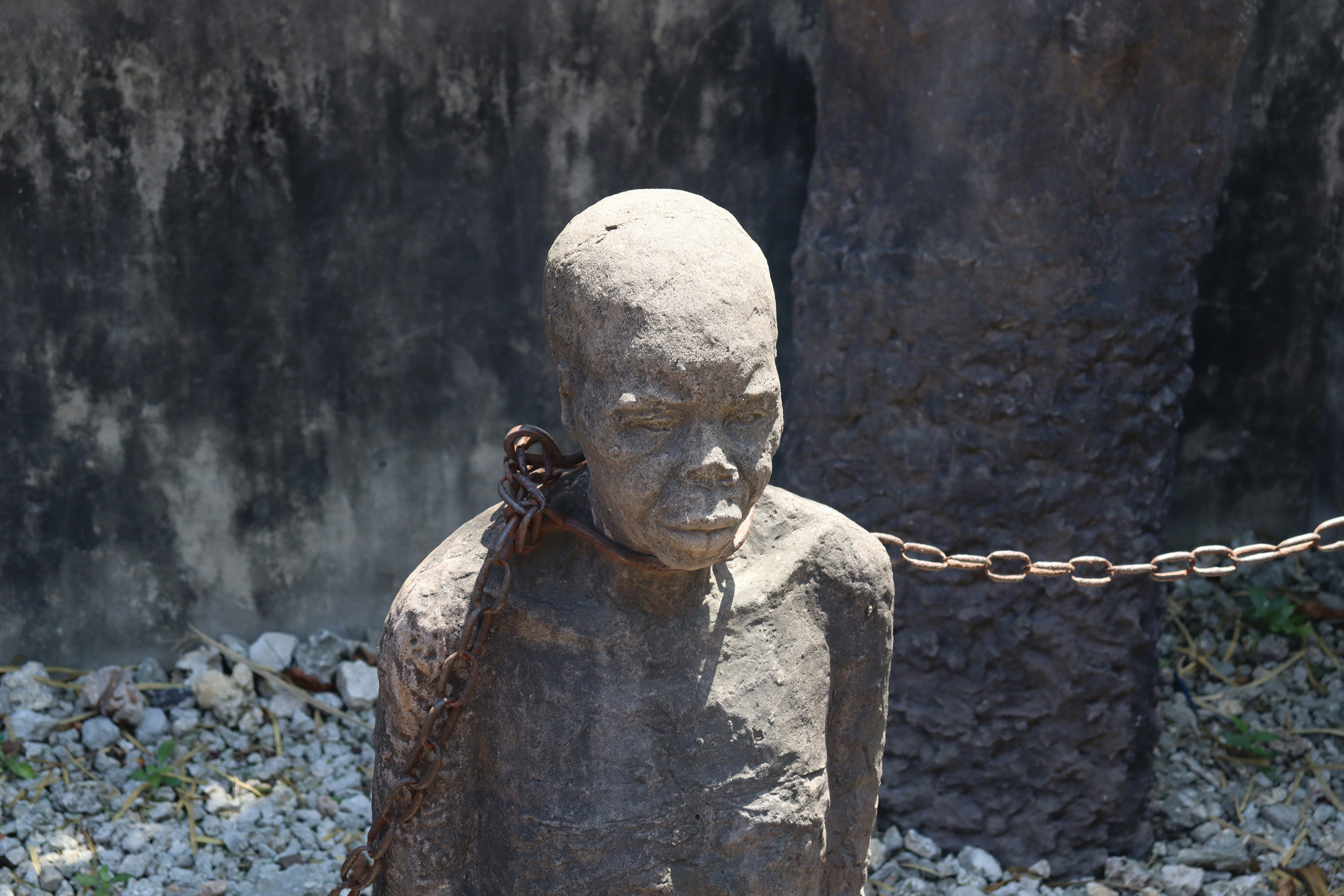
Last week, the UN General Assembly adopted a resolution about the 400-year-long transatlantic slave trade.
The resolution basically builds a case for reparations based on historical and legal reasons, but stops short of telling certain states to pay up or how – instead encouraging dialogue about it.
123 states voted in favour, 3 against (the U.S., Israel and Argentina) and 52 abstained (see which here).
3 THINGS THE RESOLUTION SAYS TO BUILD A CASE FOR REPARATIONS
Reparations have historical and legal basis
It says reparations have been provided in other historical contexts. (Hint: Why not this one?)
It lists historical examples where slavery was codified into law to show that it was a state-organized and legally codified system.
It says under international law, reparations are owed following an internationally wrongful act (true).
Slavery broke the highest laws of humanity (jus cogens)
The resolution says that slavery wasn’t just wrong, but it broke the highest laws humanity has (called jus cogens norms).
These aren’t rules countries can opt out of, and no amount of time or political deal-making can wipe the slate clean.
The obligation to make it right is still on the table… and it belongs to everyone, not just those directly involved or affected.
Slavery is the “gravest crime of humanity”
Calling slavery the “gravest crime against humanity” is a bold move; international law usually avoids ranking atrocities against each other.
This is a key reason European countries weren’t happy about the resolution and abstained.
But the resolution makes the case that slavery was uniquely devastating: its sheer scale, how long it lasted, and the fact that its effects are still reshaping lives today set it apart.
The real goal is political: the worse the crime, the stronger the case for real reparations, not just a symbolic ‘sorry’.
REMAINING CONTROVERSIES
Why didn’t the resolution go further and order reparations?
Making a case and encouraging dialogue is the maximum that could be done given the political sensitivities of the topic.
Why 52 abstentions?
Mostly European states were unhappy about slavery being ranked above other atrocities, but also uneasy about a deeper legal problem:
The rules the resolution invokes (jus cogens, crimes against humanity) didn’t exist when slavery was happening. The EU argument: You can’t really break a law before it’s written.
So the resolution is essentially asking countries to pay up today for something that wasn’t technically illegal at the time… which is a genuinely contested question in international law, and one the resolution sidesteps rather than answers.
What do you think about this argument? Let me know in the comments!
WHAT IMPACT?
Does the resolution actually bind anyone?
No.
UN General Assembly resolutions aren’t legally binding. They’re recommendations.
So what impact does it have?
Three things.
First, it shapes what countries believe the law requires. In international law, when enough states believe something is legally obligatory and act accordingly, it can harden into binding custom over time. This resolution pushes that process forward.
Second, it raises the political cost of saying no: any state now entering reparations talks does so against a UN-endorsed baseline, which strengthens the hand of countries making claims.
Third, it gives bodies like the African Union and Caribbean Community (who backed the resolution) an official stamp of legitimacy. They can negotiate reparations collectively as a bloc, directly with European states, rather than each country having to make its own individual claim and getting bogged down in legal technicalities.
What happens next?
Nobody is rushing to court! The legal questions are just too messy. Who pays what? How do you calculate it? Can you even apply today’s laws to things that weren’t illegal at the time? What about African states that were themselves involved in the slave trade? What about countries that no longer exist? Which court could take on such a case anyway? These are genuinely hard problems with no clear-cut answer.
What’s more likely is movement on returning stolen cultural artefacts like art, manuscripts, historical objects. The resolution explicitly calls for this and it’s happened recently (e.g., the Benin bronzes, France returning artefacts to Mali). Expect this to be where the real action is in the near term.
If you found this interesting, share it with someone who might find it interesting too!
Other SAIL posts you might enjoy:
So insightful!
Could you please expound on the the EU argument of you can’t really break a law before it’s written. Also, if you were asked to provide a practical towards payment of reparations, how would it look like... and also, who exactly would be eligible for such payments?
Are the countries in possession of colonial loot in violation of any international laws?