

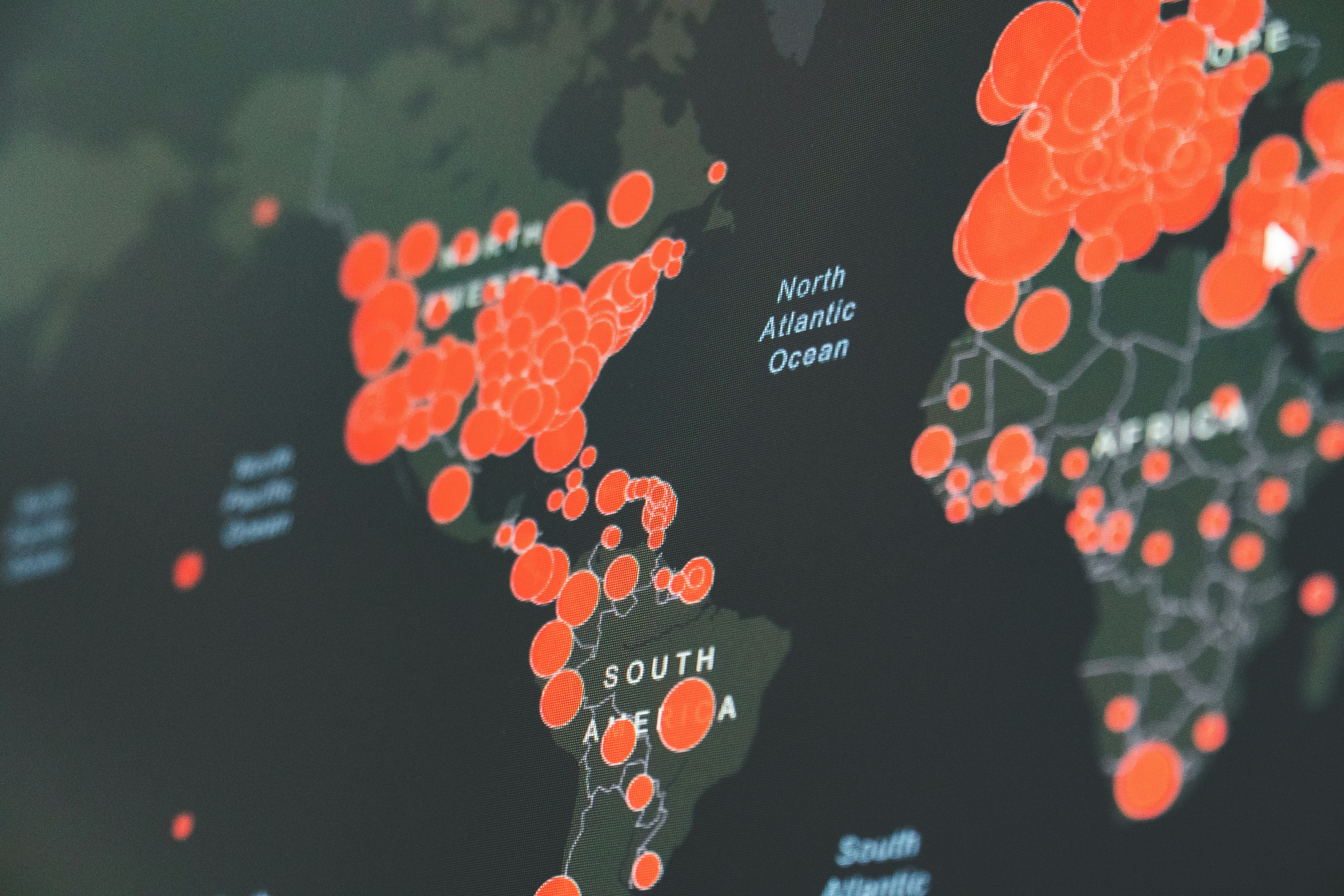
As soon as Trump began his second presidential term in 2025, he announced that the U.S. would pull out of the World Health Organization (WHO). The withdrawal took a year to take effect and became official on 22 January 2026.
Argentina followed suit, announcing its exit on 25 February 2025, which will take effect a year later on 17 March 2026.
Once both withdrawals are complete, the U.S. and Argentina will be the only countries in the world outside the WHO (!).
What’s the WHO?
WHO is an international organisation with the mission to help countries keep people healthy.
It tracks diseases (e.g., polio, HIV), gives health advice, responds to outbreaks (e.g., Ebola, COVID-19), sets health guidelines and helps countries coordinate to work together instead of everyone guessing and scrambling on their own.
Are the U.S. and Argentina allowed to leave?
The U.S. (kind of) is, but Argentina isn’t.
The WHO was created by a treaty called the WHO Constitution: basically, countries got together and said, “Let’s make a club to tackle global health.”
Most treaties spell out how members can leave, but the WHO’s Constitution… doesn’t. (Deliberately!) Awkward, right?
That’s because leaving isn’t really supposed to be an option. Over the years, countries like China, Russia, Ukraine, and others have tried, and failed, to walk away.
So yeah, Argentina? Not allowed to leave.
The U.S. is a special case. When it joined the WHO, it passed a U.S. law saying it could leave with one year’s notice, as long as it paid all the money it owed. The WHO agreed.
But here’s the catch: according to the WHO, the U.S. still hasn’t paid for 2024, 2025, or 2026!
So technically, it shouldn’t have been allowed to leave without paying up first… but it did anyway.
What does their departure mean?
The U.S. leaving is a big deal as it’s been the WHO’s top donor, only trumped (get it? 😄) by the Gates Foundation and GAVI Alliance.
Argentina isn’t a major donor, but the worry is that its exit could inspire other countries to follow.
Less money means the WHO can do less to fight disease and respond to emergencies.
It also makes the U.S. and Argentina more vulnerable if another major outbreak hits, because their governments won’t be fully cooperating or sharing information through the WHO.
One small silver lining: California has joined GOARN, a WHO-coordinated network of experts and resources that helps countries respond to outbreaks. So there’s still a foot in the door.
What’s next for the WHO?
The WHO wasn’t thrilled about this.
But it’s not all doom and gloom. Over the past year, or so it scored some wins: it adopted the Pandemic Treaty without U.S. support, and updated its International Health Regulations. Both provide guidelines for countries to handle outbreaks and pandemics more efficiently.
Now it has to scramble a bit to reorganise funding and make sure it can keep doing its job.
As for the U.S. and Argentina: they might need the WHO sooner than they think… the Nipah virus, which can kill up to 75% of those infected, has broken out in India, and countries are already on alert.
The WHO might be short(er) on cash and members, but when the next outbreak hits, everyone will still need it… whether they like it or not.
If you found this interesting, share it with someone who might enjoy it too!
Other SAIL posts you might enjoy:
It is interesting that the Constitution of the World Health Organization (WHO) does not contain a specific clause or article that prohibits or permits withdrawal. The absence of a withdrawal clause is somehow understable as health is such a critical issue that affects humanity, and does not recognise borders. This intentional move emphasizes the principle of universality and ensures long-term global health security. However what would happen if there will be continuous withdrawal of members or the resources to the organisation keeps dwindling?