

Let’s cut to the chase.
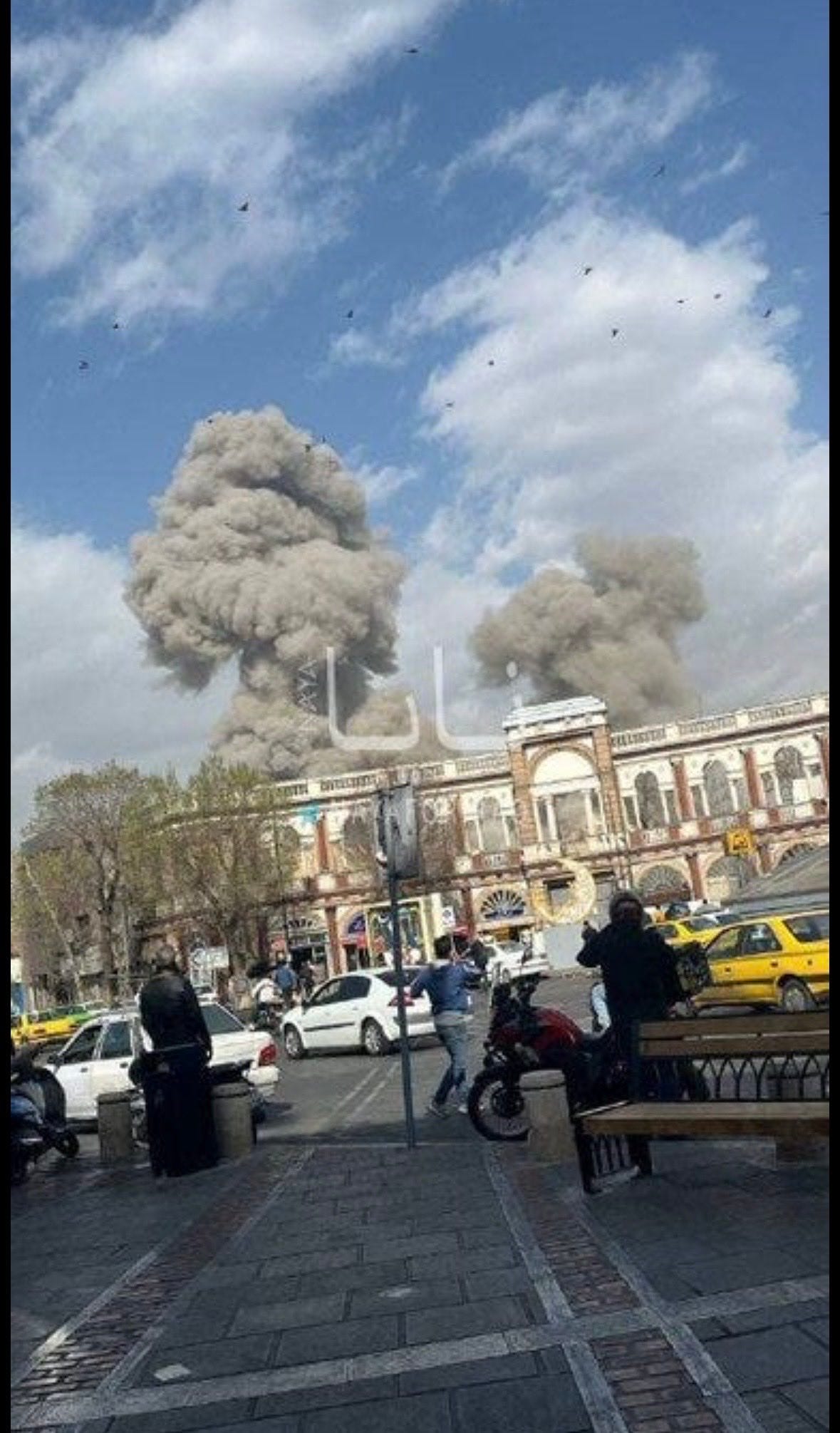
This U.S.-Israel strike was blatantly illegal. Here’s why:
No UN Security Council authorisation
A strike can be legal if the U.S./Israel got UN Security Council authorisation first.
They didn’t.
No self-defense
A strike can also be legal if acting in self-defense in response to an attack (in the past).
But Iran hasn’t attacked the United States or Israel recently.
It could also be legal if they were acting in self-defense that anticipates a future imminent attack.
Trump explained he believed there was a terrorist threat and threat of Iran having nuclear weapons, and Israel justified it ‘has the right to defend itself’.
But imminence means the threat that is instant and overwhelming, leaving no choice but to act.
That wasn’t the case here for at least three reasons.
(1) The fear of Iran having nuclear weapons has existed for many years, and we don’t know for sure whether it does.
(2) Iran has also repeated over the past few weeks that it would retaliate if it were attacked — but not initiate an attack itself.
(3) It doesn’t seem like Iran would even have the ability to attack imminently as Trump said Iran’s nuclear program was ‘obliterated’ following the U.S./Israel strikes in June 2025.
No humanitarian intervention
Trump told the people of Iran: “when we are finished, take over your government, it will be yours to take. This will probably be your only chance for generations”.
Some could take that to mean that the U.S./Israel strike on Iran was also to save the Iranian people following the Iranian government’s crackdown on protests.
But attacking a country to rescue its people from an abusive government is not authorised under international law (at least, not without UN approval).
Iran’s response is illegal under international law
Iran has retaliated by hitting U.S. bases in Qatar, Saudi Arabia, UAE, Kuwait and Bahrain.
If those countries gave consent, it’s legal. But it looks like none of them did.
Qatar, Saudi Arabia, the UAE, Kuwait and Bahrain have all released statements condemning Iran’s strikes.
So they’re illegal.
Iran and the U.S./Israel are now officially at war
Under international law, countries are at war as soon as one strikes the other.
This means they have to respect the rules of warfare.
One key rule is not harming civilians or civilian objects (e.g., schools, hospitals).
But the U.S./Israel already bombed a school in Iran…
And Iran bombed a hotel in Dubai, an airport in Kuwait and residential buildings in Bahrain.
What now?
If this is anything like the June 2025 attack (and many other past tensions/incidents between the U.S./Israel and Iran, things will (hopefully) simmer down (?).
There might still be a chance that they’ll go back to the negotiating table to strike a new nuclear deal — after all, Oman reported that talks were going well.
If you want more legal background on U.S./Iran tensions, I’ve written about that here.
I’ve also written about the Iran protests, which are relevant to today’s strike.
Please note: This post is being updated as the story develops!
Subscribe as I break down developments right here on SAIL, and share with someone who wants to understand this too!
Other SAIL posts you might enjoy:
The US-Israel-Iran War Has Been Ugly. Here’s What International Law Says (in 3 minutes)
The Strait of Hormuz: A 3-Minute International Law Breakdown
10 Days, 10 Issues: The International Law of the US-Israel-Iran War (in 3 minutes)
Was Killing Iran’s Supreme Leader Lawful Under International Law? (In 2 minutes)
Yes,
Both countries have breached international law one way or the other ..
Their armed conflict violates the principles of territorial jurisdiction and protection of unarmed civilians under International Law
There's talk of Israel and the US branding their attack on Iran as 'preemptive' action. Could they justify any imminent threat under IL? Also since the attacks in Bahrain, UAE, Qatar, Kuwait were all targeting the US bases there would they still count as an attack on the countries themselves? Asking since in all practicality these bases operate as markedly different from their host states