

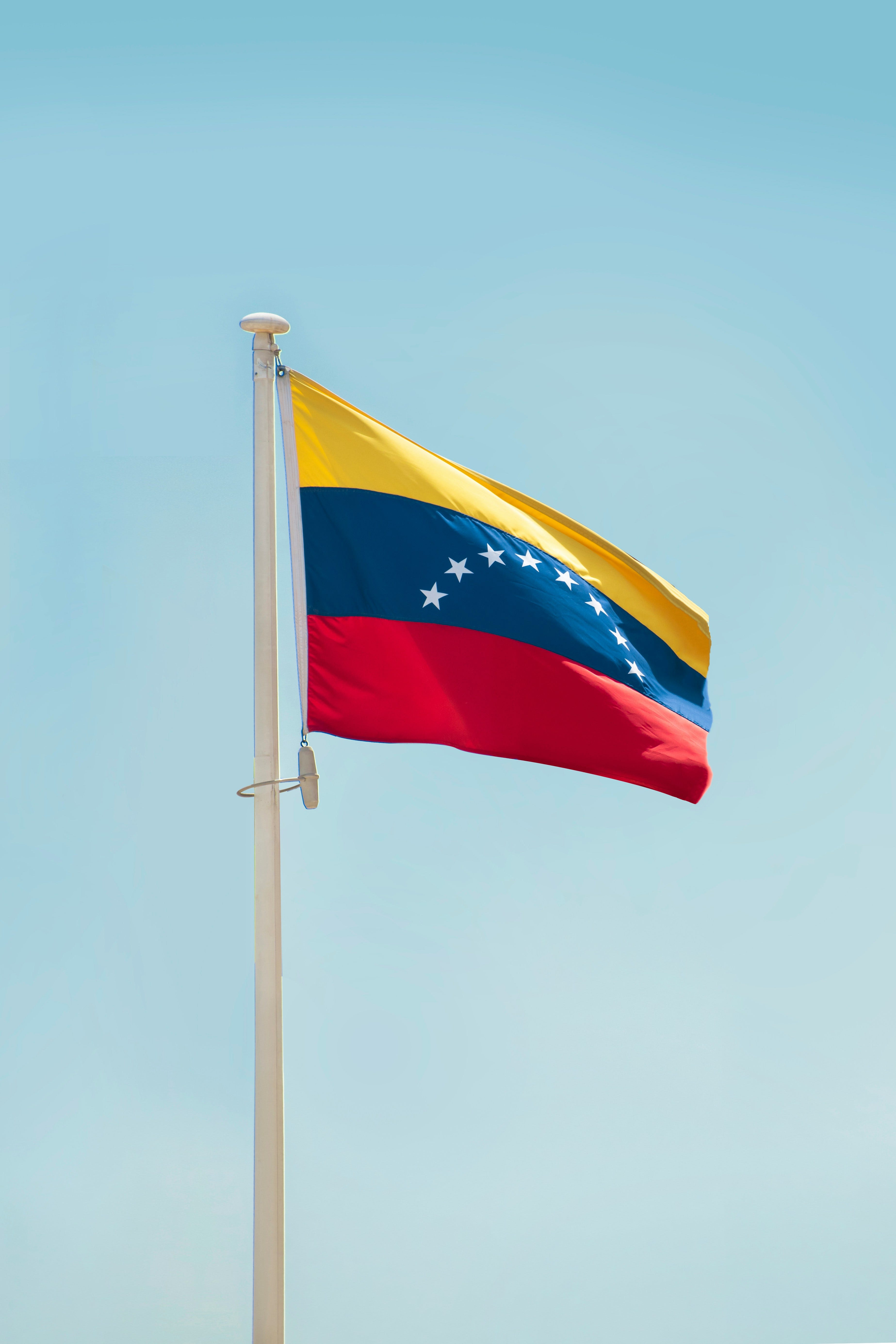
Trump announced that the US has launched strikes in Venezuela and captured Maduro and his wife.
This raises some of the clearest violations of international law we’ve seen in decades!
I. THE LEGALITY OF US INTERVENTION
Are the strikes on Venezuela legal?
No. Absolutely not.
As I explained in another post, under international law, the use of force is prohibited unless one of two narrow exceptions applies: Self-defence (Article 51), or authorisation by the UN Security Council.
Neither applies here.
Venezuela has not attacked the US nor was it about to, and there is no Security Council mandate. That alone makes the strikes unlawful.
Is intervening to remove Maduro or “take over” Venezuela legal?
Also no.
International law strictly prohibits intervention in the internal affairs of another state, including deciding who governs it (Article 2(7) UN Charter).
Whether Maduro is unpopular, oppressive, or illegitimate does not give another state the right to impose regime change by force.
One can believe Maduro should not be leading Venezuela and still recognise that a US attack is illegal.
“But the US has good motives!”
The following common arguments don’t change the law:
“But Maduro is illegitimate / authoritarian”:
Even if true, illegitimacy does not legalise invasion. You cannot uphold international law by violating it. Two wrongs don’t make a right.
“But Maduro is pushing drugs into the US / narco-trafficking”:
(JD Vance and Marco Rubio have both claimed this.)
But as I explained in a previous post, there is no such thing as a lawful “war on drugs” across borders that would justify killing traffickers.
Similarly, drug trafficking does not justify military force against another state.
“But Maduro is committing human rights violations in Venezuela”:
Some states have argued that it is lawful to use force in another country to protect the population from serious human rights abuses by its own government.
However, this practice (unilateral humanitarian intervention) is not generally recognised as lawful under international law.
In other words, there is no general exception allowing states to use force to enforce human rights in another country.
“But Venezuela has oil”:
If anything, this makes the violation worse. Strategic or economic motives never justify the use of force.
What about capturing Maduro and his wife?
Also illegal.
First, you can’t just grab people in another country without that country’s permission.
Doing so is considered an illegal extraterritorial arrest under international law.
Even if a country’s laws apply beyond its borders in some cases, actually going into another country to arrest or detain someone is not allowed… unless that country agrees or the UN Security Council gives permission.
Neither of those applies here.
Second, this also breaks international human rights law.
Kidnapping someone from another country without following proper legal procedures is exactly that: an illegal and unfair deprivation of their freedom (see here, Article 9).
II. WHAT HAPPENS NEXT?
Can Maduro be tried in New York?
No.
If we consider that Maduro is still President following his capture, then he enjoys personal immunity from prosecution before foreign (i.e. US) courts.
(This applies even if another state claims he is “not legitimate” - as French courts confirmed when trying Syria’s Assad).
Some might argue that Maduro is technically no longer President following his capture. But reading the Venezuelan constitution (Articles 233-234), this isn’t very clear.
Can the US govern Venezuela during its “transition phase”?
No.
The practice of one state administering another is largely a thing of the past, dating back to when the UN organized mandates and trusteeships after the two world wars.
Today, there is no legal basis for this, especially unilaterally.
III. ACCOUNTABILITY AND CONSEQUENCES
Can Trump be tried by the International Criminal Court for aggression (ICC)?
No.
This unprovoked attack / use of force is also called an act of aggression.
This is a crime under international law.
The ICC can prosecute for the crime of aggression.
But when doing so, the ICC cannot go after people from countries that haven’t joined it, like the US.
That’s the case even if that country (i.e., the US) commits acts of aggression in a country that is a member, like Venezuela.
What should countries be doing?
At the very least, they should be clearly condemning the US move! (See, e.g., Norway’s statement.)
Vague statements of “concern” or even support for it (looking at you, Ursula von der Leyen, Emmanuel Macron and others!) are not good enough.
If we accept a world with no regard for international law and where “might makes right”, this won’t stop here: Russia will do the same with Ukraine, China with Taiwan, and the US in Greenland and beyond!
(In fact, Trump has already said that Cuba is next on its list. Will the world applaud that too?)
Global stability can only be maintained when states insist on applying international law consistently — even when it’s (politically) inconvenient.
What do you make of this saga? Comments are open!
Hit the ‘Like’ button if you found this post useful!
Other SAIL posts you might enjoy:
When Your Friend Asks Whether Trump can Block Venezuela’s Airspace, Here is Your 1 Minute Answer
Unpacking the Law Behind the Trump-South Africa Drama in 2 Minutes
Why U.S. Missile Strikes on ISIS in Nigeria Don’t Violate International Law (in 2 minutes)
Venezuela II: Answering Your Top International Law Questions After the Maduro Capture (in 3 minutes)
3 Ways the Cuban Situation Violates International Law (in 2 minutes)
No country holds the 'global police force' honour. None. Invading a country based on 'wrongful governance' or 'narco-terrorism', and holding their President and spouse, is in no way justified anywhere in law.
The defense of the Ker-Frisbie jurisprudence used in US Law as a justification for such acts is irrelevant in international law, as municipal law is irrelevant in the characterisation of an act as internationally wrongful.
The breach of State Sovereignity stands as wrongful irrespective of political opinion.
A fantastic article I must say.
If international law is so sacrosanct, what has been done to arrest Putin for invading Ukraine? How many Russian government officials have been indicted and/or prosecuted?
How many Hamas and UNRWA cadres have been arrested and prosecuted for October 7 attack?
International law cannot be invoked and applied selectively. Being a weak system of law or positive international morality, it is just an academic exercise to analyse actions of states.