


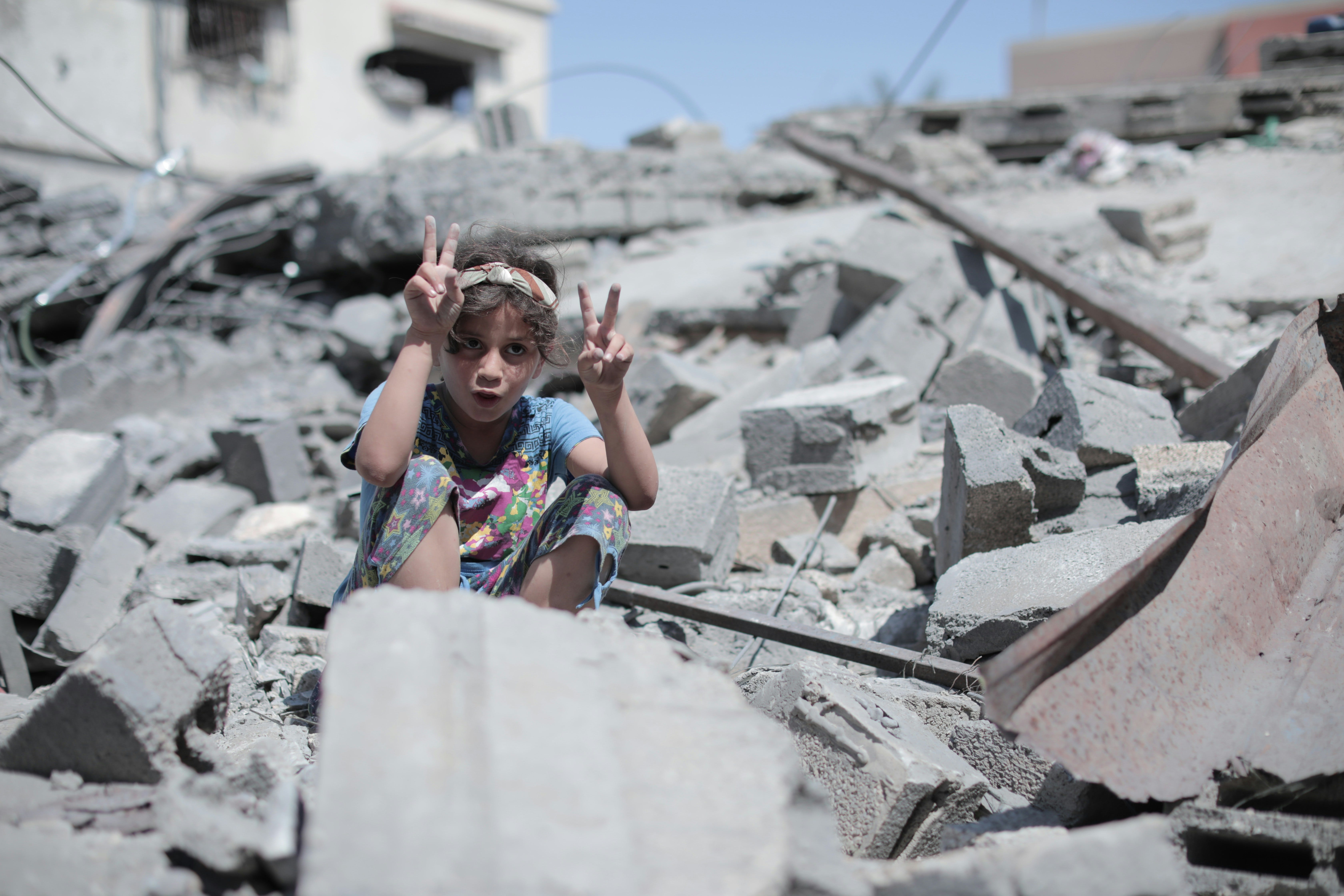
The EU just launched a $1 billion fund for Gaza’s reconstruction.
Generous, right?
But there’s a word missing that lawyers are thinking about: reparations!
A donation is an act of goodwill. Someone chooses to give, and the recipient owes gratitude in return.
Reparation is a legal remedy. Someone breached the law, and now owes a debt to repair their wrong. No gratitude required, because it was never a gift.
The outcome is the same (a rebuilt Gaza), but the rationale is different… and that matters.
That difference is why, in March 2026, a group of UN human rights experts explicitly called out the Board of Peace (remember them?!), arguing that any legitimate reconstruction process has to be “reparative” and rights-based.
Still, both reparations and donations towards rebuilding Gaza have been slow and with challenges.
1. Why reparations aren’t on the table… yet
A few reasons.
First, Israel denies wrongdoing.
It’s been accused of breaking the laws of war, including targeting civilians and civilian buildings on purpose, and hitting targets way out of proportion to any military value they had.
Israel says none of that is true.
Its position is that it acted in lawful self-defence, that it didn’t deliberately target civilians, and that its response was proportionate.
If a court ever ruled that Israel broke the laws of war, and specifically that flattening Gaza’s civilian infrastructure crossed that line, Israel could then be legally required to pay full reparations.
That wouldn’t just mean money. It could mean actually being made to rebuild what it destroyed.
But no court has made that judgment (at least, not yet…).
Second, it’s difficult to hold other states accountable.
Under the law, a state that aids or assists another state’s internationally wrongful act can be held responsible too, but only if it did so knowing its assistance would be used for that wrongful act.
Nicaragua tried exactly this argument against Germany before the International Court of Justice over Germany’s arms exports to Israel.
The Court’s judgment on this is years away, and only targets Germany.
But it would be the first time a third state is held accountable for complicity, and could maybe even be asked to pay reparations for it as a result… which is a big deal.
Third, the courts that could rule on this take years to decide, and even when they do, they can’t force a state to comply.
Aside from Nicaragua suing Germany, there have been three recent cases before the International Court of Justice (ICJ - resolving disputes between countries) touching on Gaza.
One from July 2024 declared Israel’s occupation of Palestine (including Gaza) was illegal, and mentioned reparations were owed. But it’s a non-binding opinion that Israel has ignored.
Another from October 2025 was on Israel’s obligations toward the UN and humanitarian actors operating there. It was also a non-binding opinion, and didn’t touch on reparations.
The third is South Africa’s genocide case against Israel. Contrary to the first two, this one’s a binding judgment. Plus, if Israel were found have committed genocide, reparations could follow. But we’ll have to wait another few years before we know what the ICJ decides!
Beyond the ICJ, the International Criminal Court (another court in The Hague going after individual criminals; not countries) has issued arrest warrants against Netanyahu and Gallant, but reparations only become possible after a conviction, which would be many, many years off (if at all), not least given the ICC’s many other ongoing crises.
2. Gaza might get humanitarian donations… eventually
Even donations have been challenging.
Even though Qatar said it wouldn’t “write the check” for Gaza’s reconstruction (as it has done so in the past) in December 2025, it later changed its tune and pledged $1 billion.
Others like Saudi Arabia, the UAE, and Kuwait, pledged similar amounts at the Board of Peace’s inaugural meeting in February 2026.
The EU just opened its wallet, and the US said its goal was to redevelop Gaza.
But there are some problems:
First, the UN and World Bank put Gaza’s actual reconstruction cost at roughly $71.4 billion over a decade, so the pledges made so far aren’t anywhere near enough.
Second, according to some media reports, the World Bank-administered Gaza fund has received zero dollars from anyone as of mid-2026.
Third, Israel has not made a financial pledge to the Board of Peace’s Gaza reconstruction fund.
The takeaway: Things need to move much, much faster, and political pressure is needed to hold relevant countries to account. What do you think? Comment below.
If you enjoyed this SAIL post, you might also enjoy:
Hey SAIL.
This was a good read. The manner in which the law was broken down into reader-friendly language is very impressive.
However, as an addition, you should have included the aspect of proportionality in terms of assessing whether self-defense is justified and whether Israel meets the threshold (it is most likely to be ruled that it does not). This is important, as the loosely thrown-around comment of self-defense is legally assessed as highly likely to be valid
Also, even though the rulings on Nicaragua and South Africa against Germany and Israel, respectively take years, Provisional Measures as Court Orders, that are legally binding, are usually released during this period in matters of emergencies that require the protection of fundamental rights, and including this would better address the issue of seeking justice.
Irrespective, this was a well-researched article, and I look forward to reading more and more.
The world will bs evil Israel and the US !