

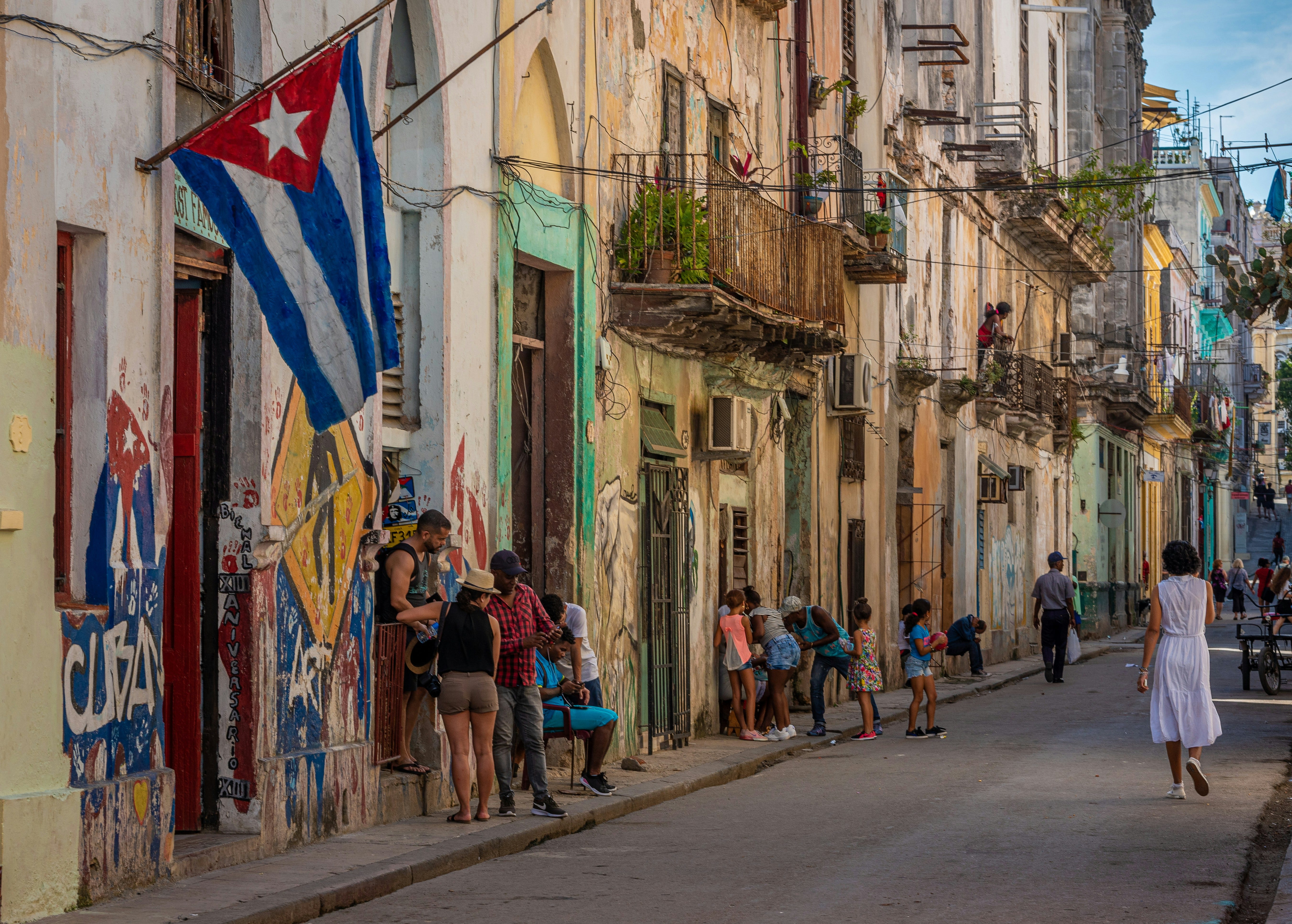
In January 2026, Trump signed an executive order declaring a “national emergency” over Cuba’s government.
He said Cuba poses an “unusual and extraordinary threat” to U.S. security and foreign policy.
The order aims to block Cuba’s access to oil by threatening tariffs on any country that sells or provides oil to it, pressuring them to stop.
Here are 3 ways this violates international law:
Violation of non‑intervention and sovereignty
The order’s goal is to cut off Cuba’s fuel and economic lifelines. By making daily life harder, the U.S. hopes to pressure Cuba to change its policies… or even its leadership.
That’s interference in Cuba’s internal affairs.
Political systems, leadership, and economic decisions belong to the country itself.
It also interferes with other countries. By threatening tariffs, the U.S. tries to control their trade and foreign policy.
International law forbids this kind of interference (Article 2(7) UN Charter).
The UN Security Council can’t do much because of the U.S. veto, but impacted countries (e.g. Mexico) can respond with retaliatory tariffs (that’s actually allowed).
Abuse of tariffs and the “national security” excuse
Tariffs are normally taxes on imports to protect industries or respond to unfair trade.
These tariffs aren’t about that. They’re meant to punish other countries for trading with Cuba, and to scare them into stopping.
This undermines the global trading system. Under World Trade Organization (WTO) rules, countries cannot impose arbitrary or punitive tariffs outside agreed limits.
The U.S. will likely argue that the tariffs are justified under Article 21 of the General Agreement on Tariffs and Trade (GATT), known as the “national security exception.”
This lets countries take trade actions they think are needed to protect their core security interests.
But this exception is limited.
It only applies in extreme situations like war or a genuine emergency in international relations.
A president declaring a “national emergency” does not automatically make it one under international law.
The WTO clarified this in the Russia – Traffic in Transit case (2019).
It also ruled that national security cannot be used as an excuse to get around trade rules (para. 7.133).
Affected countries could challenge these tariffs at the WTO, just like Nicaragua did against the U.S. in 1985.
Violating the Cuban people’s human rights
The U.S. says the measures support Cubans and promote democracy and human rights.
But in practice… ordinary Cubans are the ones suffering.
Fuel shortages hit hospitals, electricity, water, food production, and transport. When energy stops, basic services collapse.
This directly harms fundamental human rights: the right to food, healthcare, dignity, and an adequate standard of living.
Cuba has raised the issue at the UN General Assembly and UN human rights bodies have spoken up.
While this won’t instantly lift sanctions, it helps protect civilians and amplifies international pressure.
We’re almost at 1,000 SAIL readers; thank you! If you like SAIL, share it!
Other SAIL posts you might enjoy:
When Your Friend Asks Whether Trump can Block Venezuela’s Airspace, Here is Your 1 Minute Answer
Unpacking the Law Behind the Trump-South Africa Drama in 2 Minutes
Why U.S. Missile Strikes on ISIS in Nigeria Don’t Violate International Law (in 2 minutes)
The US Capture of Venezuela’s Maduro: A 3-Minute International Law Breakdown
Venezuela II: Answering Your Top International Law Questions After the Maduro Capture (in 3 minutes)
3 Ways the Cuban Situation Violates International Law (in 2 minutes)
This Article XXI exception is being used by powerful states to violate WTO rules like anything. Why can't they look for any other alternative measure which can be applied in general before resorting to Article XXI as a last resort.