

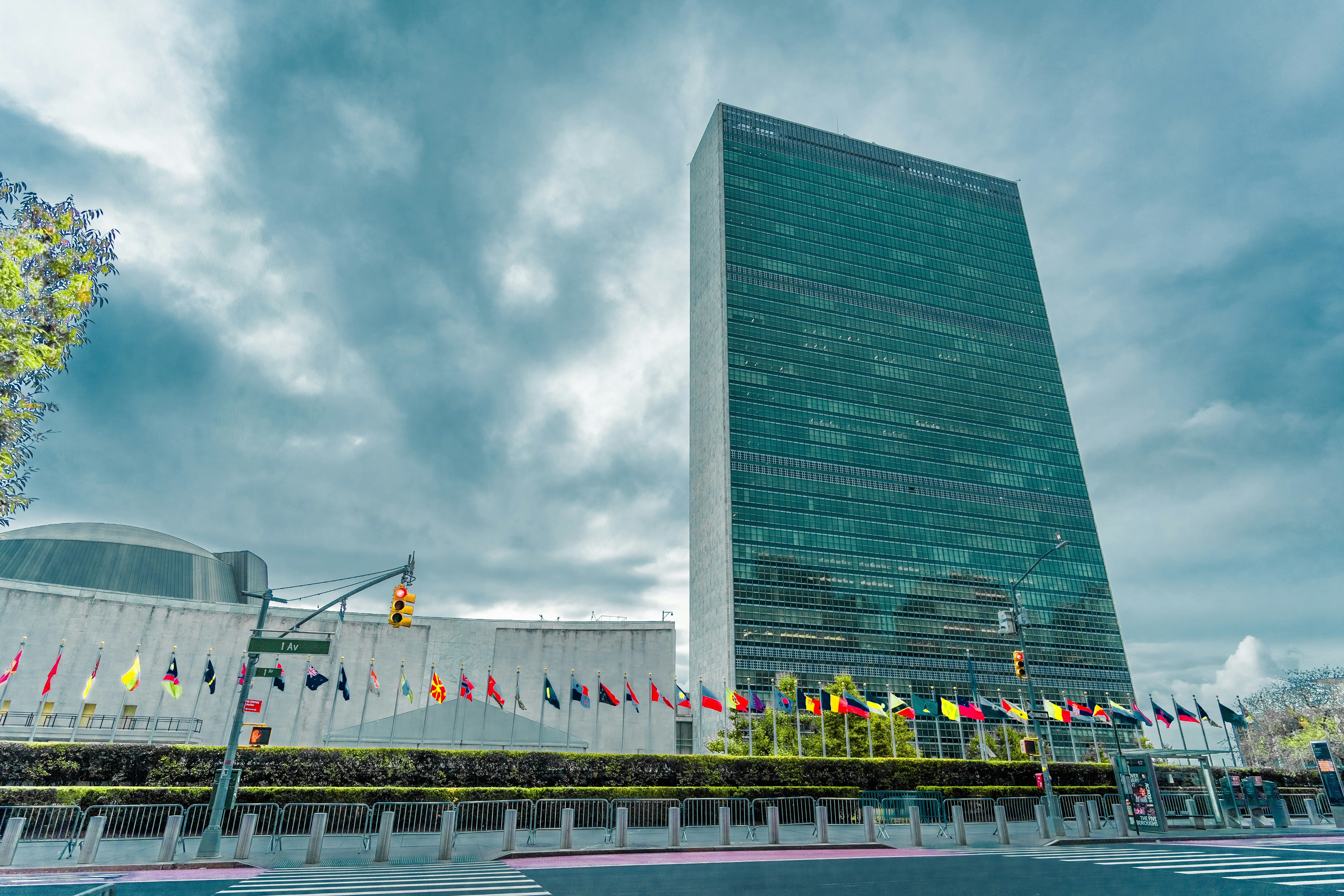
Headlines (and even the White House!) say the U.S. has ‘withdrawn’ from 66 international organisations, including 31 ‘UN organisations’.
But that’s not quite right.
For those 31, the U.S. has only stepped back from parts of the UN system, and withdrawn from one treaty: the UN Framework Convention on Climate Change (UNFCCC).
The UN vs UN bodies
The United Nations is an international organisation.
It was created by a treaty (the UN Charter), and the U.S. is still a UN Member State.
Inside the UN are many programmes, funds and departments that help carry out its work.
These bodies are not separate international organisations, as were not created by their own treaties and do not have independent legal membership.
This matters because there is nothing to legally “withdraw” from.
So when the U.S. says it is leaving these UN bodies, what it really means is this: it will stop voluntary funding, pull U.S. staff and delegates, decline leadership roles, and give up influence over agendas and decisions.
But the U.S. remains bound by the UN Charter and continues to pay mandatory UN dues to remain a UN Member State.
Those mandatory dues can still be distributed across the UN system… just more thinly.
In short: the U.S. is absent from some bodies, but still a member of the UN.
This describes everything on Trump’s “UN Organizations” list except one item.
The one real withdrawal: a treaty
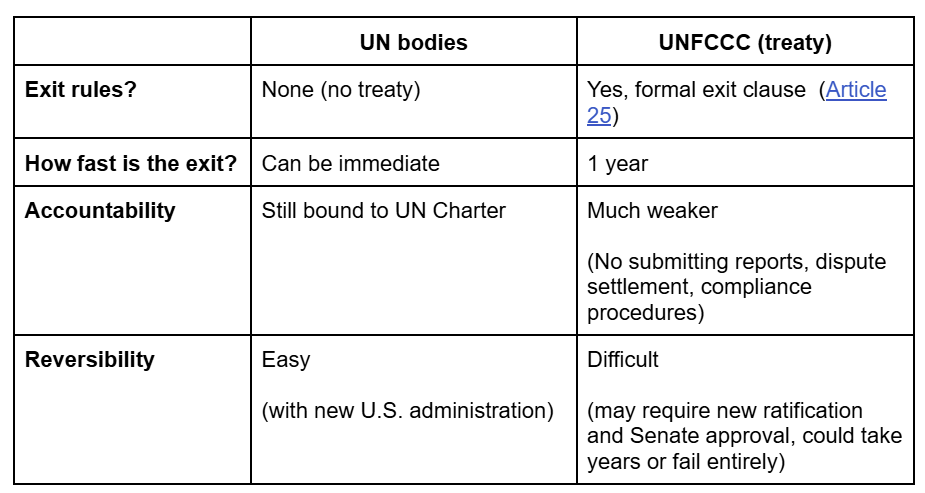
The U.S. has withdrawn from one treaty: the UN Framework Convention on Climate Change (UNFCCC).
This is different, as treaties create binding legal obligations.
Here’s how the two situations compare. (That’s right – it’s table time!)
Why do we care?
Both signal a disinterest in multilateralism and an ‘America First’ policy.
Both have financial consequences.
But disengaging from UN bodies is a policy choice, and changes what the U.S. chooses to do.
Withdrawing from the climate treaty is a legal break, and changes what the U.S. is legally required to do.
Understanding this distinction tells us what kind of damage is temporary and what could reshape U.S. influence for years to come.
Other SAIL posts you might enjoy: