


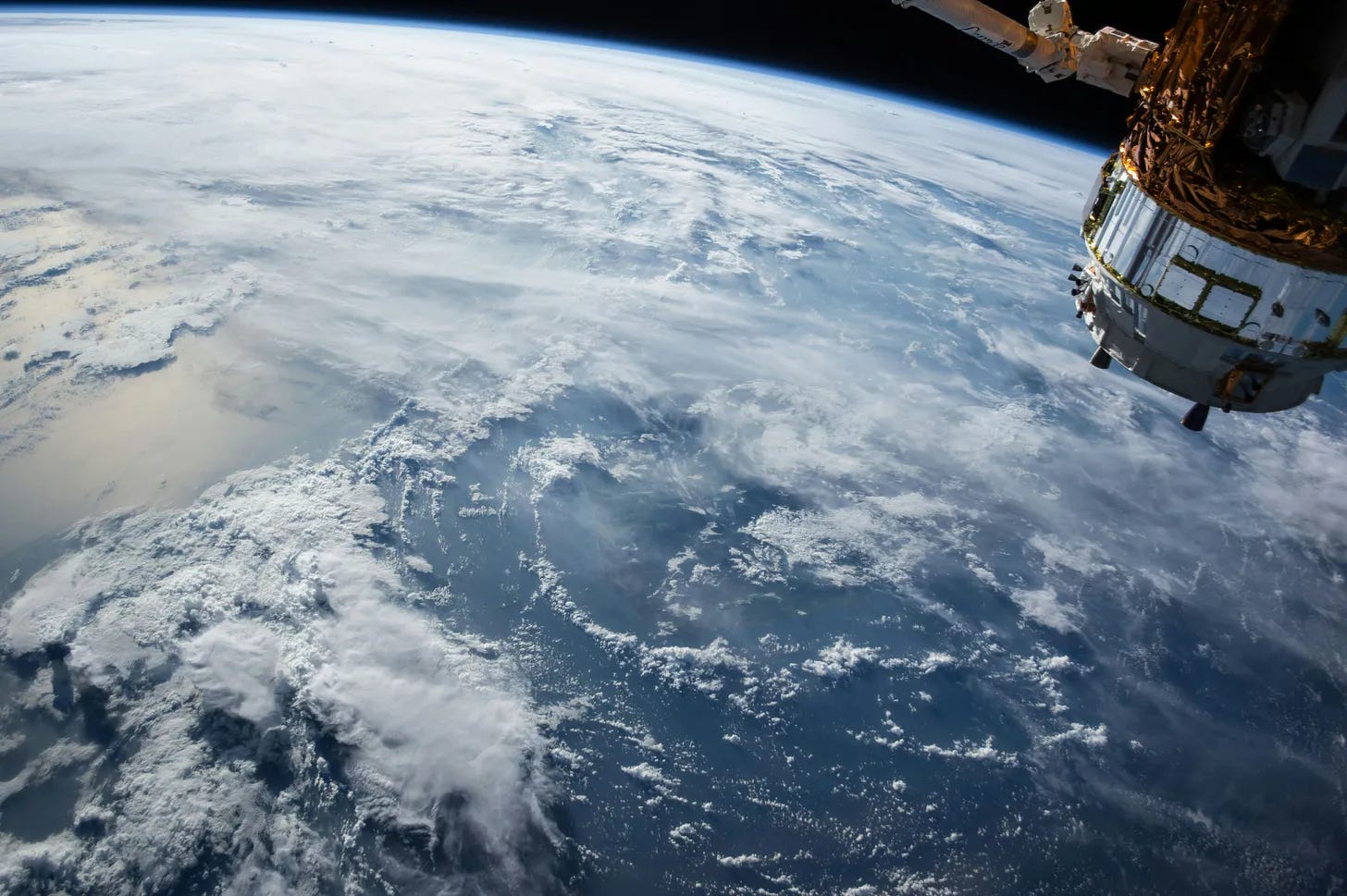
Did you hear? NASA’s Artemis II just launched, sending astronauts around the Moon and back for the first time in more than 50 years.
The mission, Artemis II, is taking its crew farther from Earth than any humans have ever gone!
Beyond rockets and science, it’s also quietly shaped by international law. Here are five things you might not know:
1. Every rocket belongs to a country
Under international law, rockets don’t belong to NASA or astronauts, but to countries.
So, Artemis II is a U.S. space object, which means the U.S. is responsible for it. (Even though the crew includes a Canadian astronaut!)
If something were to go wrong at any point (e.g., damage on Earth or to aircraft in flight), responsibility would fall on the U.S.
2. Outer Space treaty yes, Moon Treaty no
The U.S. signed the Outer Space Treaty (1967) because it says no country can own space or put nuclear weapons there, but it still lets countries explore and use space freely.
The Moon Treaty, which came later (1979), tried to go further by suggesting the Moon’s resources should be internationally controlled and shared with everyone.
The U.S. never signed it because it worried that would limit future missions.
(Artemis II wouldn’t break it anyway as it’s just orbiting the Moon; it’s not landing, mining, or claiming anything. But the U.S. didn’t want to rule out future missions that might do so!)
3. Competition is allowed (sort of)
Artemis II has been described as America’s best effort to beat China in the race to return humans to the Moon.
And international law actually allows strategic or political competition.
The Outer Space Treaty requires the Moon to be used for peaceful purposes.
But that only means that hostile acts, threats of force, and weapons of mass destruction are banned.
Exploration can be peaceful under the law while still serving national goals.
(Whether that should count as peaceful is a debate space law never really settled… What do you all think? Let me know in the comments!)
4. No one can own the Moon
The goal of Artemis II is to bring NASA one step closer to landing astronauts on the Moon, currently planned for mid-2027.
But under the Outer Space Treaty, no country can claim the Moon.
Even landing, spending time there, or planting a flag (looking at you, Armstrong) doesn’t create ownership.
5. Environmental rules are lagging
Rockets release emissions directly into the upper atmosphere, where they can affect ozone levels and climate systems, and space missions can leave behind debris (i.e. bits of old spacecraft).
Yet the main international space treaties were written before environmental protection became a global legal priority.
So, there are no clear international rules about environmental harm caused by space launches/missions. There’s a gap.
So even though Artemis II might cause environmental damage, there’s little that environmentalists can do about it.
If you found this interesting, share it with someone who might enjoy it too!
Other SAIL posts you might enjoy:
This’s a brilliant article. So topical. Thank you. One quick question, if the rockets belong to countries (not companies) - would the US be liable for environmental damage caused by its shuttles. Understand that that will be difficult to quantify.
I find this paragraph very helpful in this issue
"440. The Court observes that certain rules of international law relating to global common
goods, such as the climate system, may produce erga omnes obligations (see Conclusion 17,
paragraph 3 of the commentary, ILC Conclusions on identification and legal consequences of
peremptory norms of general international law (jus cogens), Yearbook of the International Law
Commission, 2022, Vol. II, Part Two, p. 66). In the present context, the Court considers that all States have a common interest in the protection of global environmental commons like the atmosphere and the high seas. Consequently, States’ obligations pertaining to the protection of the climate system and other parts of the environment from anthropogenic GHG emissions, in particular the obligation to prevent significant transboundary harm under customary international law, are obligations erga omnes. In the treaty context, the Court recalls that the UNFCCC and Paris Agreement acknowledge that climate change is “a common concern of humankind” (UNFCCC, first preambular paragraph; Paris Agreement, eleventh preambular paragraph), requiring “a global response” (Paris Agreement, Article 2). They seek to protect the essential interest of all States in the safeguarding of the climate system, which benefits the international community as a whole. As such, the Court considers that the obligations of States under these treaties are obligations erga omnes partes."