


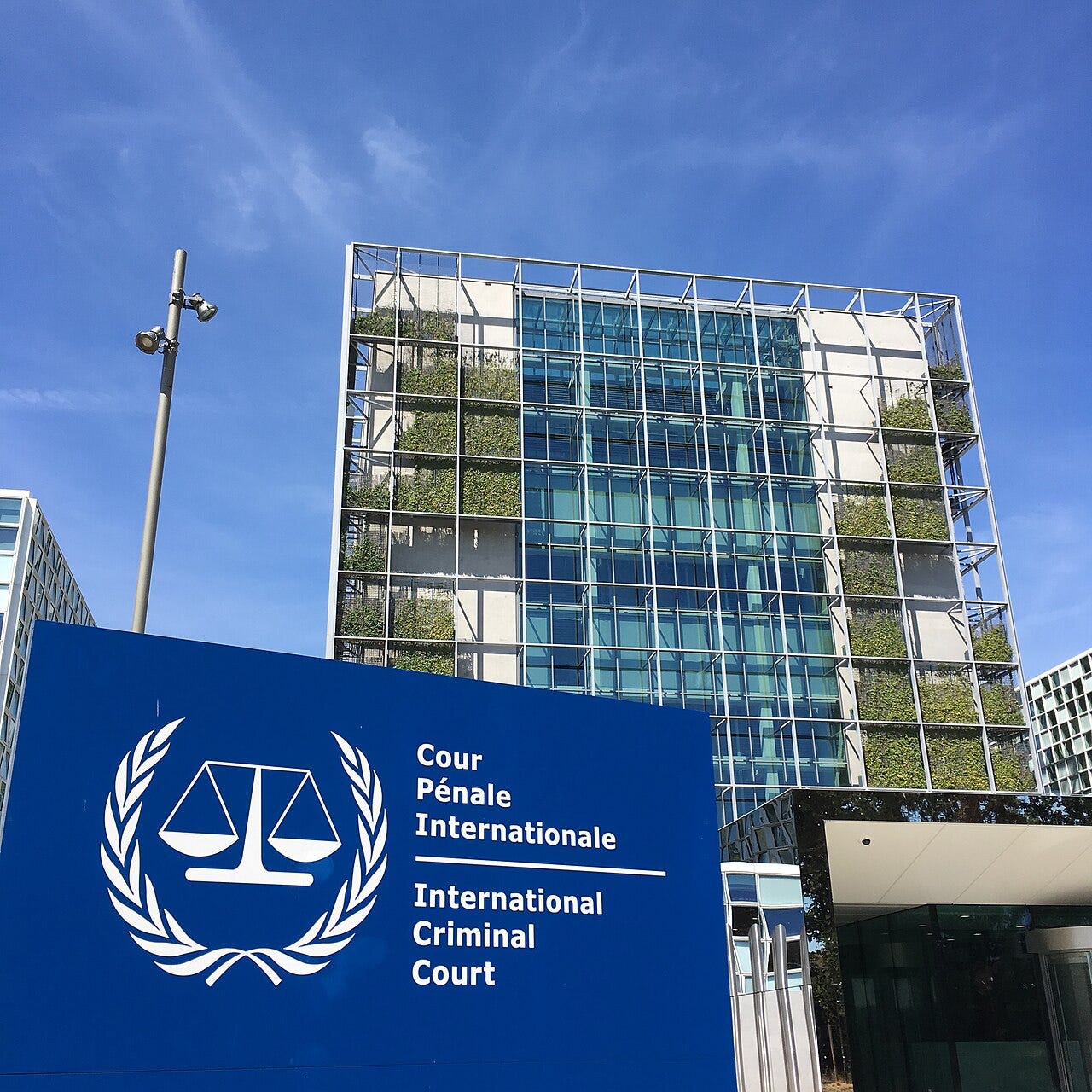
Author: justflix (Creative Commons Attribution-Share Alike 4.0 International license.)

Venezuela announced it’s leaving the International Criminal Court (ICC).
The same month the ICC prosecutor was removed… and the U.S. declared war on the court.
Quite the month in The Hague!
1. What was the ICC investigating?
The ICC has been investigating the Maduro government for crimes against humanity (the arbitrary detention, torture, and persecution of political opponents and protesters).
You’ll know Maduro was captured by the U.S. on 3 January 2026 and is currently on trial in New York. That move was illegal under international law (as I covered here and here).
For those who asked me “But what was the alternative?” at the time: this is the answer.
The ICC investigation was already underway.
It is the legal path to accountability for what the Maduro government did.
2. Why did Venezuela pull out?
The government’s argument: the ICC unfairly targets countries in Africa and Latin America.
But there might be another reason.
The U.S. welcomed Venezuela’s withdrawal and praised the “new Venezuelan government’s partnership on American-led efforts to dismantle the ICC”.
So the new Venezuela government, backed by the U.S., is now apparently helping Washington dismantle the ICC.
3. Can a country just leave the ICC whenever it wants?
Yes.
(Article 127 of the Rome Statute).
Withdrawal isn’t immediate; it takes effect one year after the UN received official notification.
So Venezuela will be officially out in July 2027.
4. Does withdrawing from the ICC make the investigation go away?
No.
Even after you leave, the ICC can continue investigating and prosecuting crimes it started looking into, that occurred while you were a member.
Venezuela joined the ICC in 2000. The court has been investigating crimes allegedly committed since 2014. Leaving now doesn’t erase those years.
The ICC just can’t touch anything that happens after Venezuela’s withdrawal takes effect in July 2027.
But the investigation might be harder without Venezuela being obligated to cooperate after July 2027 (e.g., arrest suspects, hand over evidence, etc.).
5. Who else has left the ICC and what happened?
Burundi was the first to leave the ICC in 2017, after the ICC started assessing whether to open a formal investigation there in 2016.
The ICC opened the investigation anyway, two days before Burundi’s withdrawal took effect.
It has been ongoing for ~9 years with no individual indicted/arrested and no cooperation from Burundi.
Still, it shows withdrawal doesn’t legally end an investigation.
The Philippines left in 2019, after the ICC started assessing whether to open an investigation in 2018 (see the pattern?).
But the ICC investigation continued, a warrant was issued for former President Duterte in March 2025, he was arrested and his trial opens in November 2026.
Withdrawal did not save him.
So Venezuela’s new government should take note:
Withdrawal buys you nothing and the investigation continues either way.
6. What does this mean alongside Khan’s removal; is the ICC falling apart?
The ICC has survived U.S. hostility before, but never the combination of
(1) the U.S. launching a campaign to actively dismantle it;
(2) judges being sanctioned;
(3) states pulling out;
(4) the prosecutor (Khan) being removed.
Whether it survives this depends on whether the remaining members hold firm.
Other SAIL posts you might enjoy:
The ICC Prosecutor Was Just Fired. Here’s What It Means (in 2 minutes)
A 3-Minute Update on the International Criminal Court’s Chaos Era
How the International Criminal Court Ended Up in Its Chaos Era (Explained in 2 minutes)
The US Capture of Venezuela’s Maduro: A 3-Minute International Law Breakdown
Venezuela II: Answering Your Top International Law Questions After the Maduro Capture (in 3 minutes)
I’m curious about something. The “legal” alternative to the U.S.’s capture of Maduro would have been to let the ICC do its job. But if the ICC had been investigating the Maduro government for several years and nothing had yet come of it, do you think the ICC alternative would truly have been the better option?
While obviously acknowledging the blatant contravention of international law involved in his capture, I suppose my question is whether the inevitable delay in securing justice through the ICC would have been worth it.
Interesting times for the ICC! It’s the best court for bringing accountability to individuals who have committed crimes against innocent people and communities, and the countries who are still members have an opportunity to make it even better, to protect their own futures