

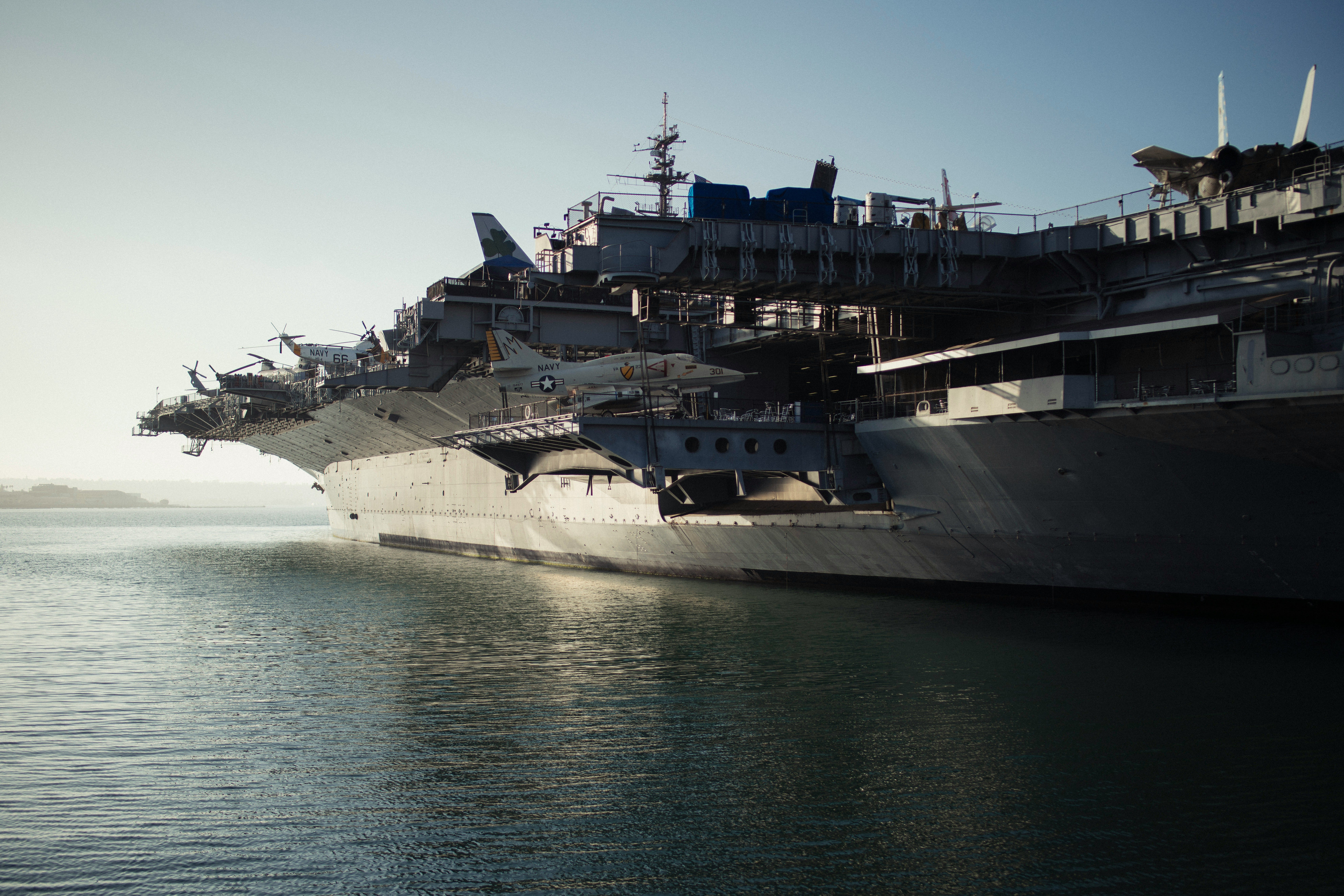
Tensions are high: The world’s largest U.S. aircraft carrier has just arrived in the Caribbean, and Venezuela is mobilizing a large number of troops. Could a U.S. attack be on the horizon? Although President Trump denies it, it’s worth taking a clear look at what international law actually says about such a move — just in case.
Would a U.S. attack on Venezuela be justified under international law?
You guessed it: Nope.
There are two possible official justifications: self-defence and authorisation from the UN Security Council.
Self-defence? No — there’s no ongoing or imminent attack that would justify a U.S. military response.
UN Security Council authorisation? Also no — the UN has not approved any such action.
There’s one more — and highly controversial — justification: humanitarian intervention. This refers to a situation in which one country (State A) uses military force inside another country (State B) without the consent of State B or the United Nations, claiming the goal is to protect civilians from large-scale atrocities committed by State B itself. In this case, the U.S.’s argument would be that it is protecting Venezuelans from Maduro’s government, which has suppressed political opposition and committed serious human rights violations.
Some argue humanitarian intervention is gaining acceptance under international law based on ‘state practice’ — i.e., what countries actually do, even if it’s not formally in treaties. Examples often cited include NATO’s intervention in Kosovo (1999) and more recently, Russia’s claimed justification for invading Ukraine (2022).
But here’s the thing: most countries and legal experts don’t agree that humanitarian intervention without UN approval is lawful. There isn’t enough consistent practice or agreement to make it a legitimate rule under international law.
So, in this case, it’s not a valid justification.
What now?
Venezuela’s issues should be addressed within the framework of the law. The International Criminal Court already has an open investigation into crimes committed there, and a United Nations Fact-Finding Mission has gathered (and continues to gather) evidence that can support future prosecutions.
If the U.S. were to invade, Venezuela wouldn’t be protected by the Inter-American Treaty of Reciprocal Assistance — basically Latin America’s version of NATO — because it’s no longer a member (since 2013). The U.S. is still in, and under the treaty, other member countries would have been expected to step in to prevent or stop a conflict between two American states (Article 7).
Many Latin Americans dislike Maduro, but they also strongly oppose U.S. military interventions — so even if they wouldn’t be required to defend Venezuela, they’d possibly push back against a Trump-led invasion. In response, they could block U.S. planes or ships from using their ports, ask the United Nations to hold an emergency meeting and/or encourage global condemnation. Within the U.S., Congress could also take steps to challenge or limit U.S. military action and push to end any conflict in Venezuela.
But let’s hope diplomacy prevails before it comes to that!
Other SAIL posts you might enjoy:
When Your Friend Asks Whether Trump can Block Venezuela’s Airspace, Here is Your 1 Minute Answer
Unpacking the Law Behind the Trump-South Africa Drama in 2 Minutes
Why U.S. Missile Strikes on ISIS in Nigeria Don’t Violate International Law (in 2 minutes)
The US Capture of Venezuela’s Maduro: A 3-Minute International Law Breakdown
Venezuela II: Answering Your Top International Law Questions After the Maduro Capture (in 3 minutes)
3 Ways the Cuban Situation Violates International Law (in 2 minutes)
Right to Protect - R2P, how about US using that argument? And not to throw a curveball in this but there has been some sabre rattling of recent between Venezuela and Guyana after discovery of oil in Western Guyana... could also turn into a "ensuring protection of another member state" argument both under IATRA and UN in general.