

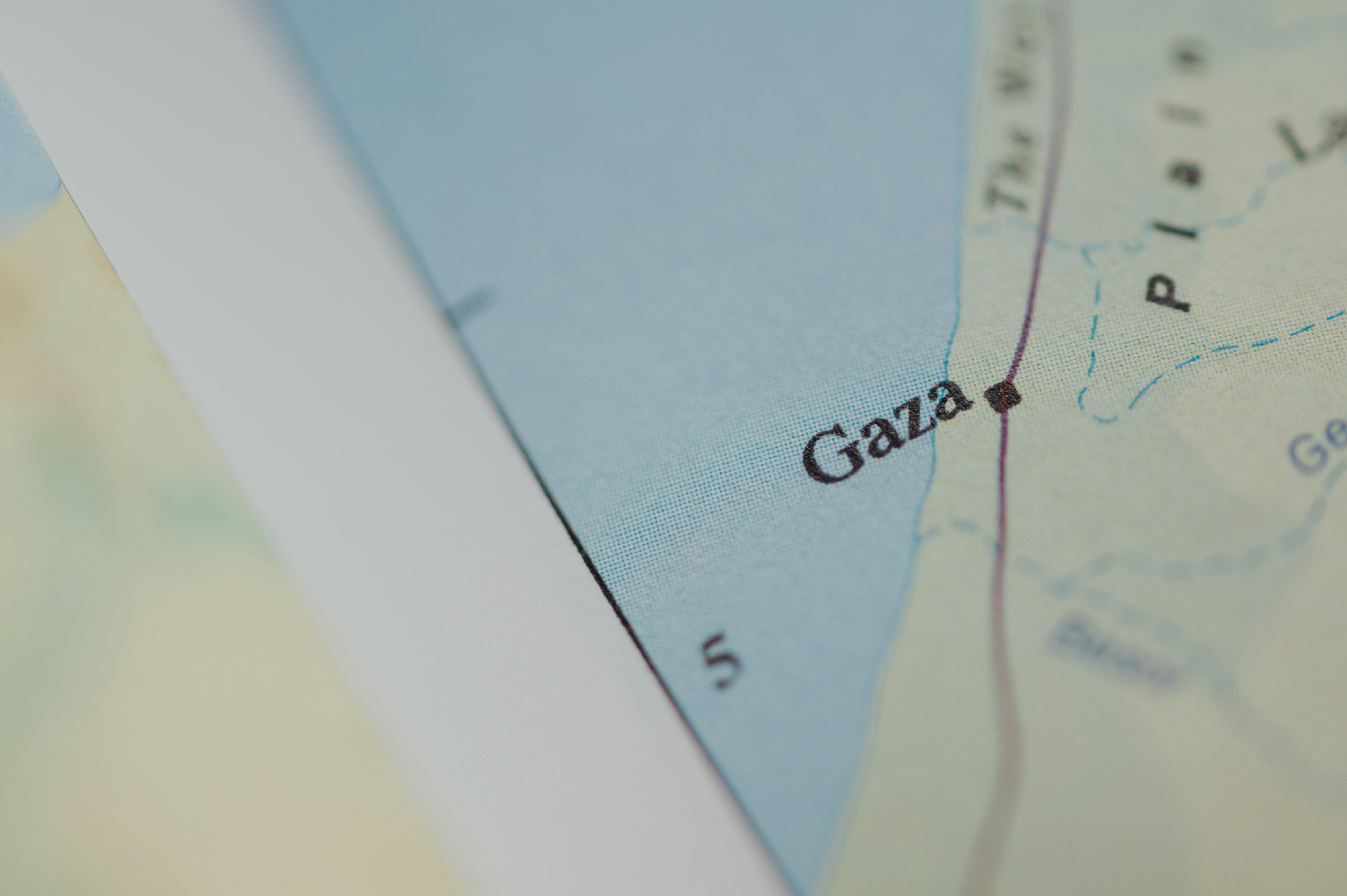
After the Israel–Hamas ceasefire, Donald Trump introduced a peace plan and pushed the UN Security Council (UNSC) to adopt it for international backing. The UNSC just did: 13 of 15 members voted in favour (Algeria, Denmark, France, Greece, Guyana, Pakistan, Panama, Republic of Korea, Sierra Leone, Slovenia, Somalia, UK, USA), with China and Russia abstaining. Here’s what it says.
So what’s the plan?
A temporary Board of Peace (BoP), led by Trump, will rebuild and stabilize Gaza before handing it back to Palestinian control by 31 December 2027.
After that, a real path toward Palestinian self-determination and statehood could open up.
The BoP has two main goals:
1. Rebuild Gaza
Set up a temporary local government
Oversee reconstruction
Support a neutral team of qualified Palestinian officials to run daily services (civil service and administration)
Facilitate movement in and out of Gaza
Bring aid back into Gaza
Coordinate funding (from countries, World Bank, donors, partners, etc) to rebuild Gaza
2. Stabilize Gaza
Create a temporary International Stabilization Force (ISF) — an armed peacekeeping force from several countries
Disarm Gaza by permanently destroying Hamas’ weapons and infrastructure
Keep humanitarian corridors open and safe for aid and civilians
Train and support vetted Palestinian police
Protect civilians and maintain peace
Legal issues:
How would this work in practice?
Hamas rejects any plan that includes disarmament, saying it only helps the Israeli occupation, and wants any international force limited to border and ceasefire monitoring.
Israel, on the other hand, objects to the parts about Palestinian self-determination and future statehood.
With both sides unhappy, it’s unclear how the plan can actually hold up legally…
Self-determination:
Should the Palestinians’ right to self-determination (i.e., to decide their own fate) come with conditions or be placed on someone else’s timeline? And is it appropriate to frame it so tentatively, as if it’s only a possibility rather than a commitment?
UNRWA:
The resolution doesn’t mention the United Nations Relief and Works Agency for Palestine Refugees (UNRWA), leaving its role in humanitarian aid unclear, even though the International Court of Justice has said it should be involved (see para. 124).
What’s next?
We’ll find out who’s in the BoP in the next few weeks, according to Trump.
What do you think of this development? Let me know in the comments.
Other SAIL posts you might enjoy:
The US-Israel-Iran War Has Been Ugly. Here's What International Law Says (in 3 minutes)
The Strait of Hormuz II: Answering Your International Law Questions in 3 Minutes
Five Reasons the US-Iran Ceasefire Is Legally Fragile (in 3 minutes)
Israel’s Occupation of Southern Lebanon: A 3-Minute International Law Breakdown
It is as credible as a card shark in Vegas.
Isn't the right to self-determination a jus cogens obligation?