

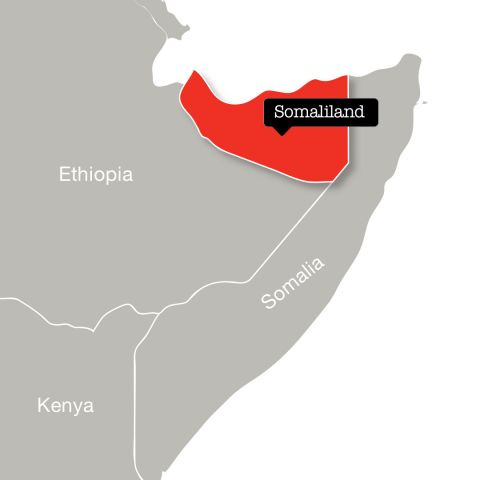
(Source of image: Somalia/Somaliland: the differences and issues explained | ActionAid UK)
Somaliland is a place in the Horn of Africa that has declared itself an independent country.
But until now, no country formally considered it one.
That changed when Israel recognised Somaliland as a state in December 2025.
So… what does that actually mean in international law?
Let’s break it down.
Is Somaliland a state?
No (at least not yet, legally speaking).
To figure out what counts as a “state” under international law, people usually point to the Montevideo Convention of 1933, which sets out four criteria for statehood:
a permanent population
a defined territory
a government, and
the capacity to enter into relations with other states.
On paper, Somaliland meets all four.
It has a stable population, controls territory, governs itself, and already engages with other countries.
So if this were just a checklist, Somaliland would pass.
But that’s not how international law works in real life.
States don’t magically pop into existence just because they tick the Montevideo boxes.
In practice, recognition matters more.
Recognition is when one country officially decides to treat another place as a state. Each country makes that decision for itself.
You can meet all the requirements to join a club, but unless the other members accept you, you’re still stuck outside.
Some entities meet all four Montevideo criteria but aren’t recognised, so they remain outside the international system.
Other places are recognised as states even though they don’t perfectly meet the criteria.
So while the Montevideo Convention matters, recognition by other states often carries more weight.
That’s why Somaliland, despite meeting the legal criteria, has mostly been treated as not being a state… until Israel’s move.
What does Israel recognising Somaliland actually change?
Israel and Somaliland recognising each other formalises their relationship and has real legal consequences.
First, diplomatic missions.
Israel can open a mission in Somaliland, and Somaliland can open one in Israel. These become the official channels for communication between the two governments.
Second, diplomatic immunity.
Diplomats posted between the two will receive immunity, meaning they generally can’t be arrested or sued in the host country. Beyond the practical side, immunity is symbolic, signalling recognition of the other as an equal sovereign state.
Third, treaties.
Recognition allows Israel and Somaliland to sign treaties between them as equal sovereign states.
Will Israel’s recognition make Somaliland a state?
No.
Israel recognising Somaliland means that Somaliland is a state from Israel’s perspective, and Israel’s alone.
There’s no single global switch that flips Somaliland into being a country for everyone.
Each state has to decide whether it recognises Somaliland independently.
So how many recognitions are “enough”?
That’s the frustrating part: international law doesn’t give us a magic number.
Take Palestine as an example. It’s recognised by over 150 countries (roughly three-quarters of the world!) and there’s still debate about its legal status.
So there won’t be a clear moment where Somaliland suddenly becomes “objectively” a state in everyone’s eyes anytime soon…
So why are people worried?
Many countries are not happy about Israel’s move. (Check out Qatar’s scathing statement here!)
One concern is that Israel’s recognition could start a domino effect, encouraging other states to recognise Somaliland too.
That could seriously destabilise the East African region, especially given Somalia’s strong opposition to Somaliland’s independence and the fragile political balance in the Horn of Africa.
Let’s see how this story unfolds…!
Other SAIL posts you might enjoy:
The US-Israel-Iran War Has Been Ugly. Here's What International Law Says (in 3 minutes)
Israel’s Occupation of Southern Lebanon: A 3-Minute International Law Breakdown
Five Reasons the US-Iran Ceasefire Is Legally Fragile (in 3 minutes)
The Strait of Hormuz II: Answering Your International Law Questions in 3 Minutes
Israel Stopping the Global Sumud Flotilla: An International Law Breakdown (in 4 minutes)
Where's the line drawn international law between recognizing a state and recognizing a government. And what exactly is an illegitimate government, who gets to label a government as illegitimate and what are the consequences of such 'illegitimacy'.
P.S: we're all waiting for your Venezuela post🫣
Really excellent piece- thank you.
I just wondered if, as a matter of practice, once a certain number of countries recognise an entity, that recognition effectively pushes it over the threshold to being recognised as a State.