


What’s the situation?
Iran has been ruled by the Supreme Leader Ali Hoseini-Khamenei since 1989.
He is not directly elected by public vote and holds ultimate power, making Iran an authoritarian system.
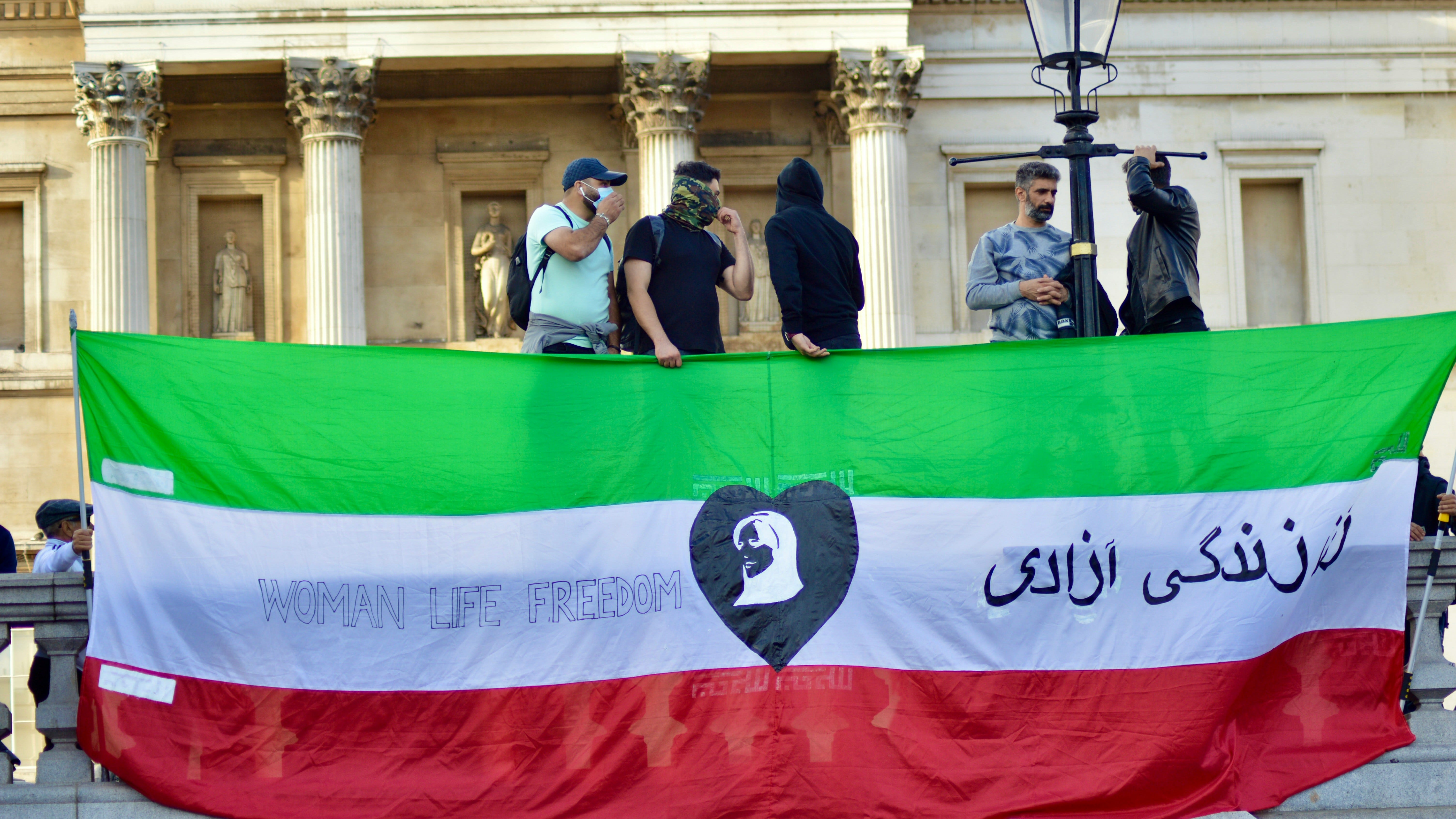
Iranians (including women, students, and civil society activists) have protested his rule repeatedly for decades.
The current wave is one of the largest yet and has led to many deaths.
Some foreign governments, including the U.S. and Israel, oppose Khamenei. The U.S. has publicly supported the protests.
Why are people protesting?
Years of corruption, economic collapse (worsened by UN and Western sanctions), and social controls like compulsory women’s headscarf (hijab).
What began as demands for reform has turned into calls to overthrow Khamenei.
Are the protesters allowed to protest?
Absolutely!
Articles 19 and 21 of the International Covenant on Civil and Political Rights (ICCPR) guarantee freedom of expression and peaceful assembly.
Iran is a party to this human rights treaty, so it’s legally bound to respect these rights.
Can the Iranian government kill protesters?
No.
The ICCPR rights aren’t unlimited; Iran can impose some restrictions on protests for security or order.
But killing peaceful protesters is never allowed.
The same goes for blanket bans, mass arrests and internet shutdowns, by the way.
Can the US or other states help the protesters?
Depends how they’re helping.
Under the principle of non-intervention, foreign states may not fund, arm, or direct opposition groups in another country. (See here, Article 2(7)).
But diplomatic statements, political speeches, and sanctions are allowed.
Can the US and other states sanction Iran?
Yes.
Iran has faced two types of sanctions: UN Security Council sanctions, which all UN members must follow (mainly over its nuclear program), and sanctions that the U.S. and other Western countries have imposed on their own.
Can the US invade Iran on humanitarian grounds?
No.
Attacking another country without UN authorisation is unlawful except in self-defense.
Attacking that country to save its people (i.e. ‘humanitarian intervention’) is not an accepted justification in international law.
The UN Security Council could authorise such an invasion. But this is unlikely as China and Russia would block it with their veto.
Can the US threaten to invade Iran?
Nope.
Even threatening force is illegal.
What if it invades anyway?
They would likely face serious pushback from countries like Saudi Arabia, Qatar and Turkey, who have blocked similar moves before.
Also, Iran has warned it’ll strike back. Gulp.
Can Iranian leaders be tried by the International Criminal Court (ICC)?
Unlikely.
Iran isn’t part of the International Criminal Court (ICC), so the court can’t automatically try its leaders.
The UN Security Council could refer the situation to the ICC, but that is very unlikely because countries like Russia and China would block it. (Sigh.)
Can other countries put Iranian leaders on trial?
Yes, in some cases.
A few countries can try people for serious crimes even if they happened elsewhere.
It’s not easy and usually only works if the suspect is in that country.
For example, victims of Iran’s 2022 protests filed a criminal complaint in Argentina using its laws.
Do Iranian protesters fleeing abroad have legal protection?
Yes.
People fleeing political persecution may qualify for asylum under the 1951 Refugee Convention.
Peaceful political activism and protest can form the basis for refugee status.
If this helped, tap that like button below!
Other SAIL posts you might enjoy:
The US-Israel-Iran War Has Been Ugly. Here's What International Law Says (in 3 minutes)
Israel’s Occupation of Southern Lebanon: A 3-Minute International Law Breakdown
Five Reasons the US-Iran Ceasefire Is Legally Fragile (in 3 minutes)
The Strait of Hormuz II: Answering Your International Law Questions in 3 Minutes
Israel Stopping the Global Sumud Flotilla: An International Law Breakdown (in 4 minutes)
The Architecture of a Crisis Manufactured by Hostile Foreign Powers.
An exclusive exposé on the hidden forces, intelligence networks, and propaganda machinery fueling turmoil in Iran.
https://felixabt.substack.com/p/the-architecture-of-a-crisis-manufactured